Samsung Semiconductor has established a goal to reduce the total water withdrawal of its five domestic manufacturing sites at 2021 levels through 2030. To achieve this, we are minimizing process water consumption by deploying high-efficiency equipment and expanding the use of reclaimed water in cleaning processes. Simultaneously, we are strengthening our water conservation capabilities by integrating treated municipal wastewater as a stable alternative water source.
Beyond internal reduction and reuse, Samsung Semiconductor is expanding its contribution to local communities through external partnerships and "Water Positive" initiatives. Furthermore, recognizing the critical importance of natural capital and biodiversity, we are dedicated to preserving the ecosystem through reforestation, environmental cleanup, and habitat restoration efforts.
Samsung Semiconductor has established a goal to reduce the total water withdrawal of its five domestic manufacturing sites at 2021 levels through 2030. To achieve this, we are minimizing process water consumption by deploying high-efficiency equipment and expanding the use of reclaimed water in cleaning processes. Simultaneously, we are strengthening our water conservation capabilities by integrating treated municipal wastewater as a stable alternative water source.
Beyond internal reduction and reuse, Samsung Semiconductor is expanding its contribution to local communities through external partnerships and "Water Positive" initiatives. Furthermore, recognizing the critical importance of natural capital and biodiversity, we are dedicated to preserving the ecosystem through reforestation, environmental cleanup, and habitat restoration efforts.
Samsung Semiconductor has established a goal to reduce the total water withdrawal of its five domestic manufacturing sites at 2021 levels through 2030. To achieve this, we are minimizing process water consumption by deploying high-efficiency equipment and expanding the use of reclaimed water in cleaning processes. Simultaneously, we are strengthening our water conservation capabilities by integrating treated municipal wastewater as a stable alternative water source.
Beyond internal reduction and reuse, Samsung Semiconductor is expanding its contribution to local communities through external partnerships and "Water Positive" initiatives. Furthermore, recognizing the critical importance of natural capital and biodiversity, we are dedicated to preserving the ecosystem through reforestation, environmental cleanup, and habitat restoration efforts.
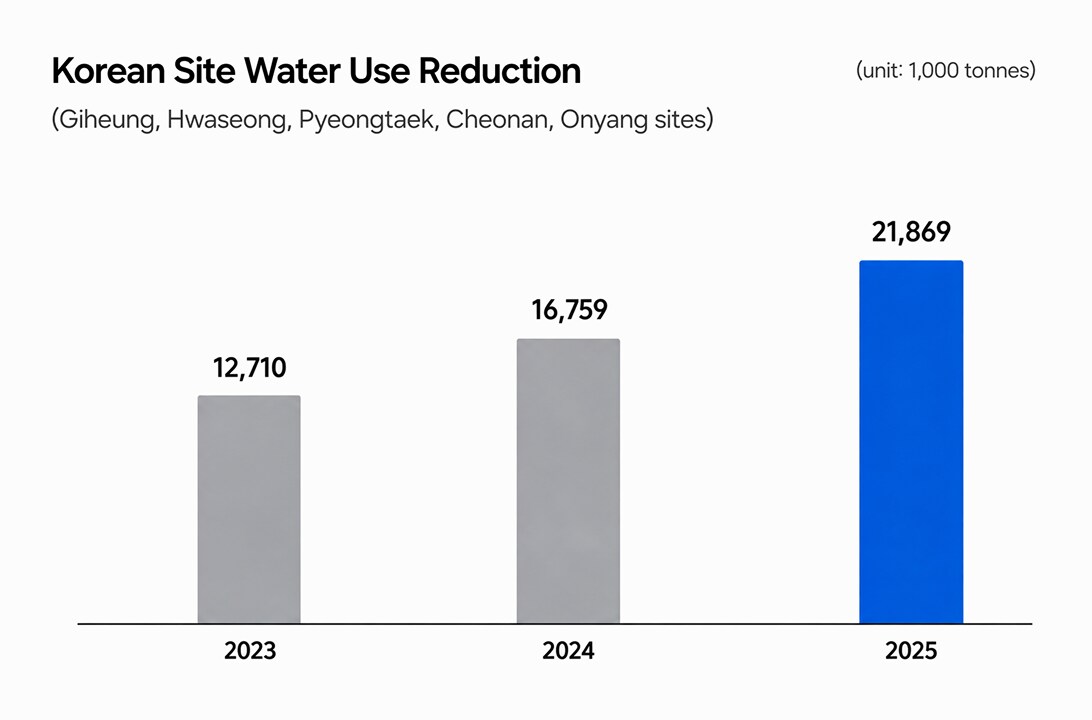
Samsung Semiconductor is extending water usage cycles by optimizing equipment cleaning processes and maximizing overall facility efficiency. As water efficiency continues to improve, we are achieving greater annual reductions, saving approximately 21.87 million tons of water as of 2025.
Samsung Semiconductor is extending water usage cycles by optimizing equipment cleaning processes and maximizing overall facility efficiency. As water efficiency continues to improve, we are achieving greater annual reductions, saving approximately 21.87 million tons of water as of 2025.
Samsung Semiconductor is extending water usage cycles by optimizing equipment cleaning processes and maximizing overall facility efficiency. As water efficiency continues to improve, we are achieving greater annual reductions, saving approximately 21.87 million tons of water as of 2025.
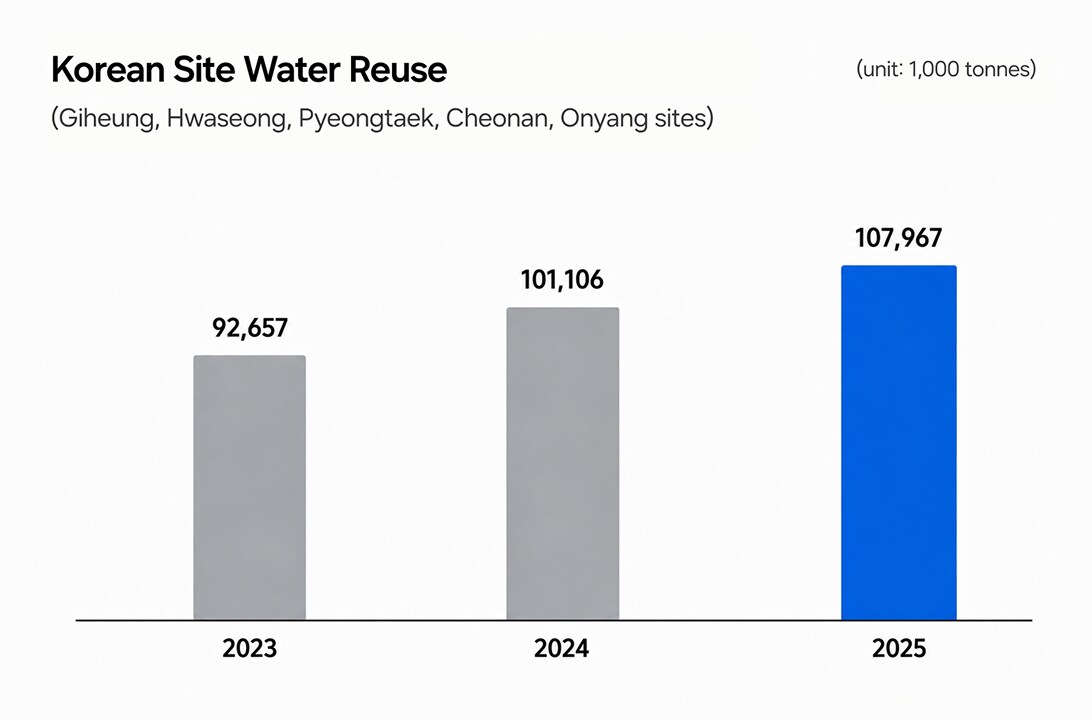
Samsung Semiconductor has established a fundamental water management principle of recovering and purifying process wastewater for reuse rather than immediate discharge. By gradually expanding the scope of reuse—utilizing treated water for process cleaning, utility supply, and cooling tower makeup—Samsung Semiconductor reused approximately 108 million tons of water at its domestic sites in 2025.
Samsung Semiconductor has established a fundamental water management principle of recovering and purifying process wastewater for reuse rather than immediate discharge. By gradually expanding the scope of reuse—utilizing treated water for process cleaning, utility supply, and cooling tower makeup—Samsung Semiconductor reused approximately 108 million tons of water at its domestic sites in 2025.
Samsung Semiconductor has established a fundamental water management principle of recovering and purifying process wastewater for reuse rather than immediate discharge. By gradually expanding the scope of reuse—utilizing treated water for process cleaning, utility supply, and cooling tower makeup—Samsung Semiconductor reused approximately 108 million tons of water at its domestic sites in 2025.
Samsung Semiconductor is also diversifying its water sources by repurposing municipal wastewater, which is typically discharged into public treatment plants or nearby rivers. Following a memorandum of understanding (MOU) with the Ministry of Environment and Gyeonggi Province in December 2024, we are working to accelerate the full-scale introduction of reclaimed wastewater, originally targeted for 2030. This initiative will establish a reclaimed water infrastructure with a maximum daily capacity of 330,000 tons1) in the Gyeonggi region, supporting the goal of reducing total water withdrawal to 2021 levels.
Samsung Semiconductor is also diversifying its water sources by repurposing municipal wastewater, which is typically discharged into public treatment plants or nearby rivers. Following a memorandum of understanding (MOU) with the Ministry of Environment and Gyeonggi Province in December 2024, we are working to accelerate the full-scale introduction of reclaimed wastewater, originally targeted for 2030. This initiative will establish a reclaimed water infrastructure with a maximum daily capacity of 330,000 tons1) in the Gyeonggi region, supporting the goal of reducing total water withdrawal to 2021 levels.
Samsung Semiconductor is also diversifying its water sources by repurposing municipal wastewater, which is typically discharged into public treatment plants or nearby rivers. Following a memorandum of understanding (MOU) with the Ministry of Environment and Gyeonggi Province in December 2024, we are working to accelerate the full-scale introduction of reclaimed wastewater, originally targeted for 2030. This initiative will establish a reclaimed water infrastructure with a maximum daily capacity of 330,000 tons1) in the Gyeonggi region, supporting the goal of reducing total water withdrawal to 2021 levels.
Beyond internal reduction and reuse, Samsung Semiconductor is pursuing "Water Positive" initiatives—a commitment to return more water to nature than the amount withdrawn. We ensure that all water used at its sites is strictly treated before discharge. To offset inevitable water loss, Samsung Semiconductor collaborates with external partners to return additional water to the environment, establishing a sustainable water management system that contributes to local communities.
Beyond internal reduction and reuse, Samsung Semiconductor is pursuing "Water Positive" initiatives—a commitment to return more water to nature than the amount withdrawn. We ensure that all water used at its sites is strictly treated before discharge. To offset inevitable water loss, Samsung Semiconductor collaborates with external partners to return additional water to the environment, establishing a sustainable water management system that contributes to local communities.
Beyond internal reduction and reuse, Samsung Semiconductor is pursuing "Water Positive" initiatives—a commitment to return more water to nature than the amount withdrawn. We ensure that all water used at its sites is strictly treated before discharge. To offset inevitable water loss, Samsung Semiconductor collaborates with external partners to return additional water to the environment, establishing a sustainable water management system that contributes to local communities.
In 2025, in partnership with the Ministry of Environment and the Korea Water Resources Corporation (K-water), Samsung Semiconductor worked to restore the purification functions of the Sinpung Wetland, located upstream of Jangheung Dam. This project has improved the quality of water flowing into the dam, securing a safe and clean water supply for local residents.
In 2025, in partnership with the Ministry of Environment and the Korea Water Resources Corporation (K-water), Samsung Semiconductor worked to restore the purification functions of the Sinpung Wetland, located upstream of Jangheung Dam. This project has improved the quality of water flowing into the dam, securing a safe and clean water supply for local residents.
In 2025, in partnership with the Ministry of Environment and the Korea Water Resources Corporation (K-water), Samsung Semiconductor worked to restore the purification functions of the Sinpung Wetland, located upstream of Jangheung Dam. This project has improved the quality of water flowing into the dam, securing a safe and clean water supply for local residents.
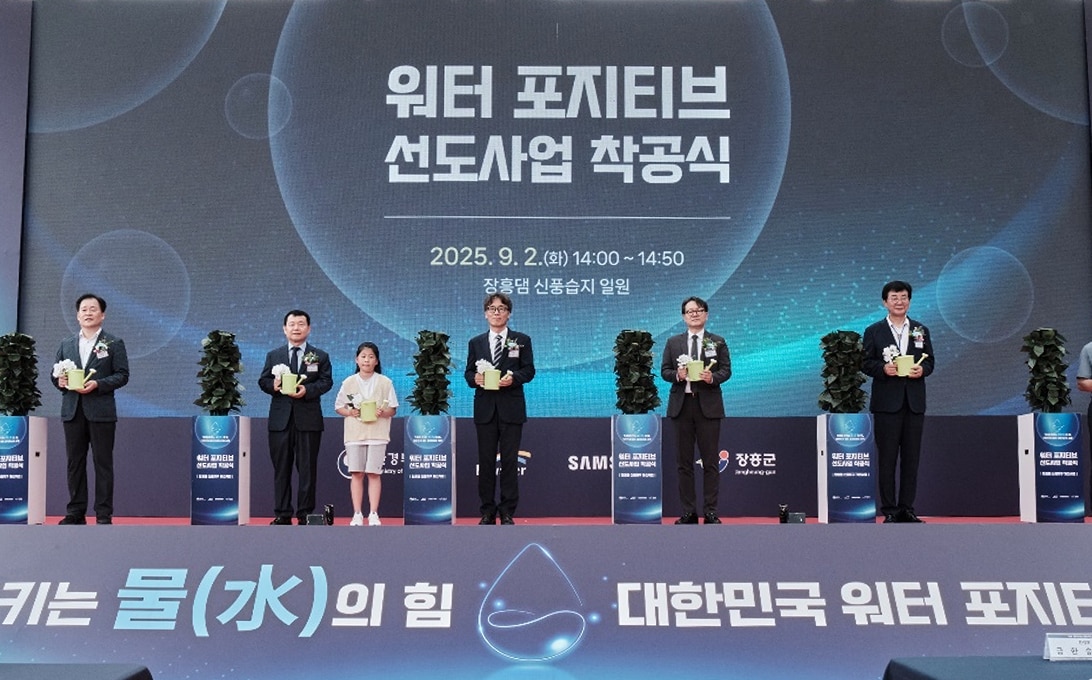
Groundbreaking ceremony for Sinpung Wetland
Groundbreaking ceremony for Sinpung Wetland
Groundbreaking ceremony for Sinpung Wetland
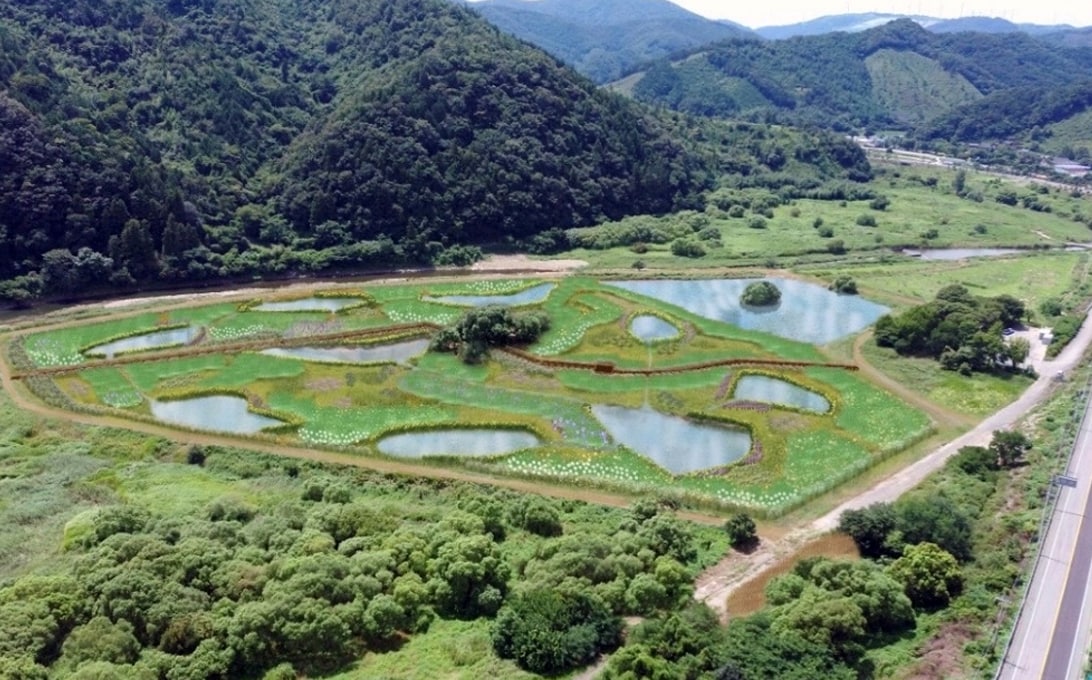
Expected aerial view post-restoration
Expected aerial view post-restoration
Expected aerial view post-restoration
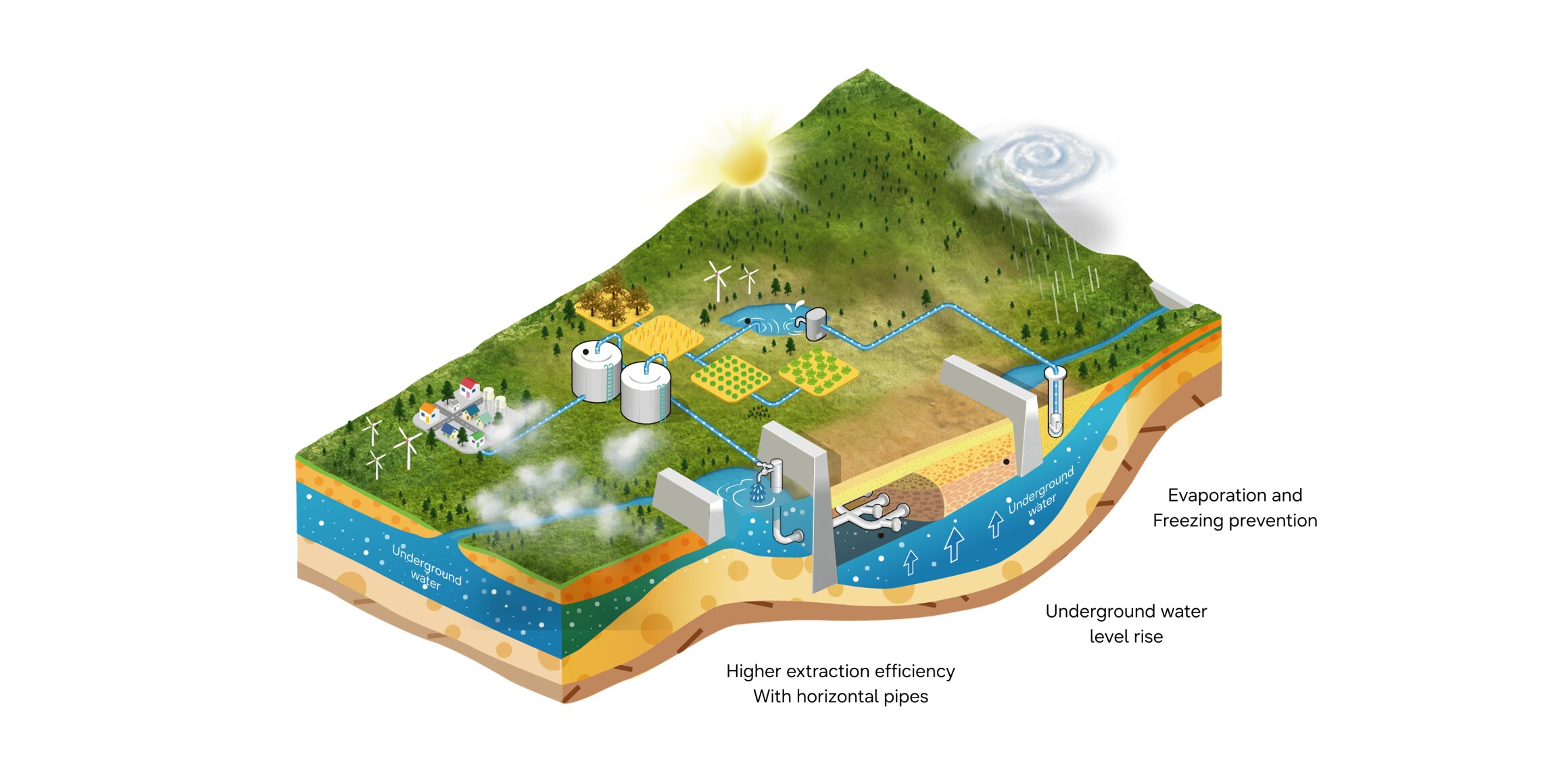
In 2026, Samsung Semiconductor signed a Memorandum of Understanding (MOU) with the Ministry of Environment, the Ministry of National Defense, K-water, and the Korea Institute of Civil Engineering and Building Technology (KICT) to install "Sand Dam" for the soldiers of the 7th Infantry Division in Hwacheon, Gangwon-do. This project, aimed at providing a stable and clean water supply, is scheduled for completion by 2027.
In 2026, Samsung Semiconductor signed a Memorandum of Understanding (MOU) with the Ministry of Environment, the Ministry of National Defense, K-water, and the Korea Institute of Civil Engineering and Building Technology (KICT) to install "Sand Dam" for the soldiers of the 7th Infantry Division in Hwacheon, Gangwon-do. This project, aimed at providing a stable and clean water supply, is scheduled for completion by 2027.
In 2026, Samsung Semiconductor signed a Memorandum of Understanding (MOU) with the Ministry of Environment, the Ministry of National Defense, K-water, and the Korea Institute of Civil Engineering and Building Technology (KICT) to install "Sand Dam" for the soldiers of the 7th Infantry Division in Hwacheon, Gangwon-do. This project, aimed at providing a stable and clean water supply, is scheduled for completion by 2027.
Samsung Semiconductor recognizes the vital benefits of natural capital and the critical importance of biodiversity. To prevent nature degradation and the loss of biodiversity, we are committed to minimizing its environmental footprint.
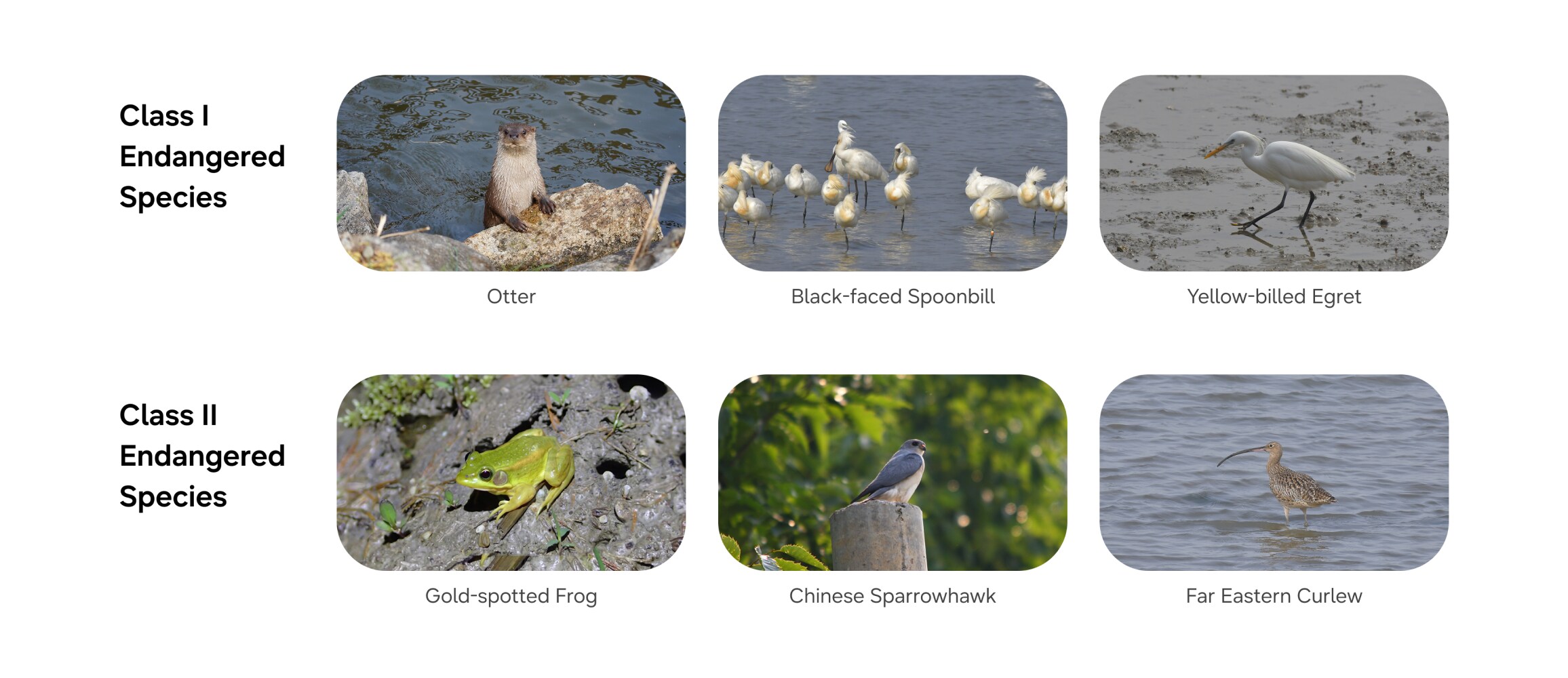
Through the continuous advancement of wastewater treatment and the introduction of high-efficiency air pollution control systems, Samsung Semiconductor has significantly reduced its impact on the surrounding environment. As a result, endangered wildlife, including otters, have been spotted inhabiting the rivers adjacent to our domestic manufacturing sites.
Furthermore, we are dedicated to restoring riparian ecosystems upstream of Paldang and Daecheong Lakes—the primary water sources for our domestic sites. Through these environmental restoration projects, Samsung Semiconductor aims to conserve at least 400,000㎡ of the ecosystem annually.
Samsung Semiconductor recognizes the vital benefits of natural capital and the critical importance of biodiversity. To prevent nature degradation and the loss of biodiversity, we are committed to minimizing its environmental footprint.
Through the continuous advancement of wastewater treatment and the introduction of high-efficiency air pollution control systems, Samsung Semiconductor has significantly reduced its impact on the surrounding environment. As a result, endangered wildlife, including otters, have been spotted inhabiting the rivers adjacent to our domestic manufacturing sites.
Furthermore, we are dedicated to restoring riparian ecosystems upstream of Paldang and Daecheong Lakes—the primary water sources for our domestic sites. Through these environmental restoration projects, Samsung Semiconductor aims to conserve at least 400,000㎡ of the ecosystem annually.
Samsung Semiconductor recognizes the vital benefits of natural capital and the critical importance of biodiversity. To prevent nature degradation and the loss of biodiversity, we are committed to minimizing its environmental footprint.
Through the continuous advancement of wastewater treatment and the introduction of high-efficiency air pollution control systems, Samsung Semiconductor has significantly reduced its impact on the surrounding environment. As a result, endangered wildlife, including otters, have been spotted inhabiting the rivers adjacent to our domestic manufacturing sites.
Furthermore, we are dedicated to restoring riparian ecosystems upstream of Paldang and Daecheong Lakes—the primary water sources for our domestic sites. Through these environmental restoration projects, Samsung Semiconductor aims to conserve at least 400,000㎡ of the ecosystem annually.
Samsung Semiconductor Newsroom
[World Water Day] Samsung’s Promise of Water for All
[World Water Day] Samsung’s Promise of Water for All
[World Water Day] Samsung’s Promise of Water for All
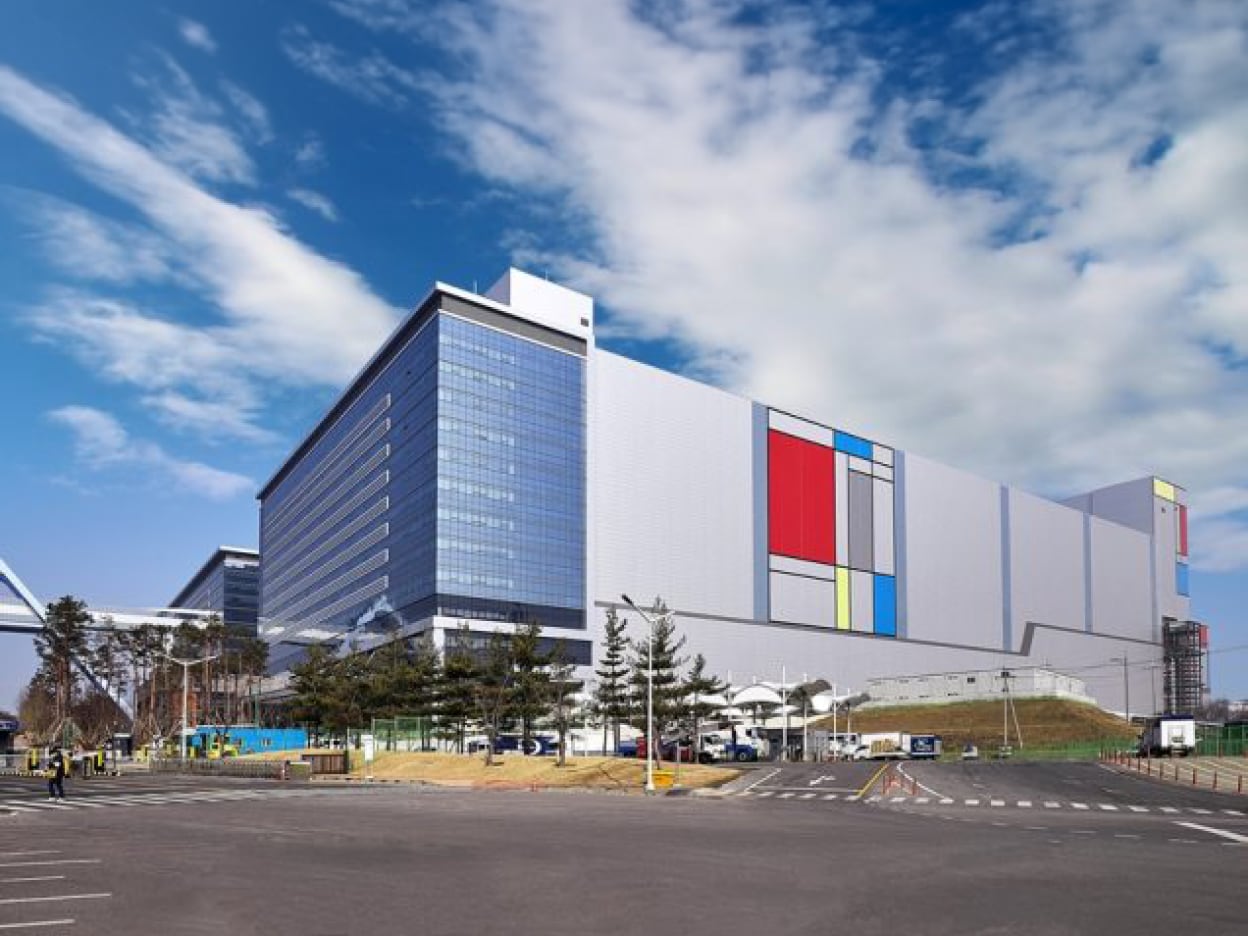
Samsung Semiconductor Newsroom
Samsung Electronics’ Water Conservation Efforts for ‘World Water Day’
Samsung Electronics’ Water Conservation Efforts for ‘World Water Day’
Samsung Electronics’ Water Conservation Efforts for ‘World Water Day’
Tech Blog
Samsung Semiconductor's Solution to Overcoming Water Stress
Samsung Semiconductor's Solution to Overcoming Water Stress
Samsung Semiconductor's Solution to Overcoming Water Stress
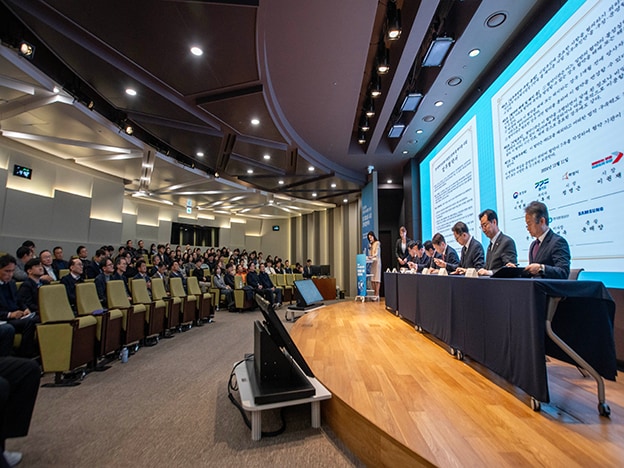
News
Samsung Semiconductor Signs MOU with Ministry of Environment and Local Governments for Reclaimed Water Collaboration
Samsung Semiconductor Signs MOU with Ministry of Environment and Local Governments for Reclaimed Water Collaboration
Samsung Semiconductor Signs MOU with Ministry of Environment and Local Governments for Reclaimed Water Collaboration
Planet
Samsung Semiconductor awarded the highest level of AWS through innovative technology
Samsung Semiconductor awarded the highest level of AWS through innovative technology
Samsung Semiconductor awarded the highest level of AWS through innovative technology

 Global