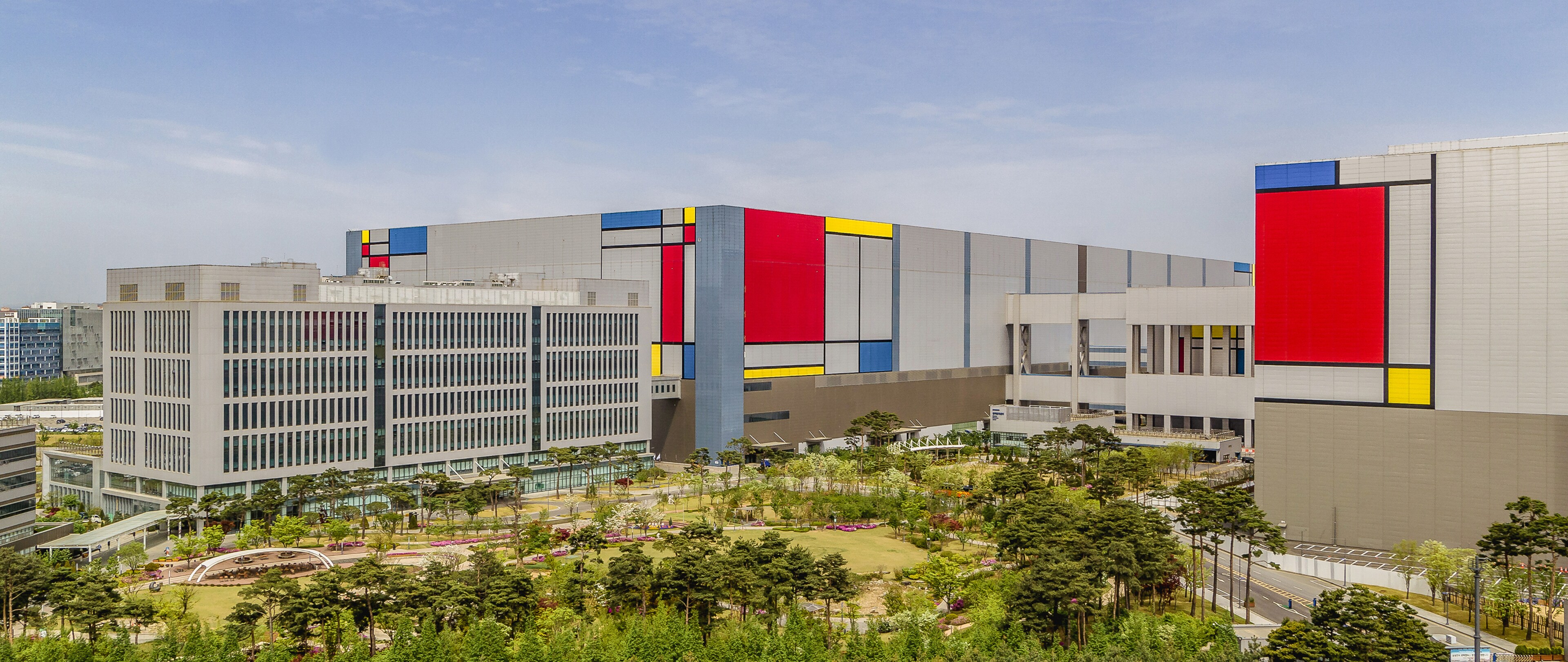
Samsung Semiconductor has established internal management standards based on domestic and international regulations related to water and air pollutant emissions, and systematically manages pollutant emissions.
In line with its New Environmental Strategy established in 2022, Samsung Semiconductor has set a goal to manage pollutant emissions at levels comparable to the natural state by 2040. To achieve this, we are expanding the development and on-site application of pollutant reduction technologies.
In addition, Samsung Semiconductor manages all chemicals used at its worksites across the entire lifecycle, from receipt to disposal. It also manages substances of concern in its products in accordance with international standards, minimizing their impact on the environment and human health.
Samsung Semiconductor has established internal management standards based on domestic and international regulations related to water and air pollutant emissions, and systematically manages pollutant emissions.
In line with its New Environmental Strategy established in 2022, Samsung Semiconductor has set a goal to manage pollutant emissions at levels comparable to the natural state by 2040. To achieve this, we are expanding the development and on-site application of pollutant reduction technologies.
In addition, Samsung Semiconductor manages all chemicals used at its worksites across the entire lifecycle, from receipt to disposal. It also manages substances of concern in its products in accordance with international standards, minimizing their impact on the environment and human health.
Samsung Semiconductor has established internal management standards based on domestic and international regulations related to water and air pollutant emissions, and systematically manages pollutant emissions.
In line with its New Environmental Strategy established in 2022, Samsung Semiconductor has set a goal to manage pollutant emissions at levels comparable to the natural state by 2040. To achieve this, we are expanding the development and on-site application of pollutant reduction technologies.
In addition, Samsung Semiconductor manages all chemicals used at its worksites across the entire lifecycle, from receipt to disposal. It also manages substances of concern in its products in accordance with international standards, minimizing their impact on the environment and human health.
Samsung Semiconductor purifies process wastewater through advanced treatment facilities before discharging it to local streams or public wastewater treatment plants. Except in emergency situations, the entire wastewater treatment process is automated, and the central control room continuously monitors the full purification process to ensure compliance with internal water quality standards.
We are also reducing chemical use by modifying process recipes and reusing chemicals from production processes in other facilities. In addition, Samsung Semiconductor continues to research filtration technologies that can selectively separate and remove target substances from wastewater.
Samsung Semiconductor purifies process wastewater through advanced treatment facilities before discharging it to local streams or public wastewater treatment plants. Except in emergency situations, the entire wastewater treatment process is automated, and the central control room continuously monitors the full purification process to ensure compliance with internal water quality standards.
We are also reducing chemical use by modifying process recipes and reusing chemicals from production processes in other facilities. In addition, Samsung Semiconductor continues to research filtration technologies that can selectively separate and remove target substances from wastewater.
Samsung Semiconductor purifies process wastewater through advanced treatment facilities before discharging it to local streams or public wastewater treatment plants. Except in emergency situations, the entire wastewater treatment process is automated, and the central control room continuously monitors the full purification process to ensure compliance with internal water quality standards.
We are also reducing chemical use by modifying process recipes and reusing chemicals from production processes in other facilities. In addition, Samsung Semiconductor continues to research filtration technologies that can selectively separate and remove target substances from wastewater.
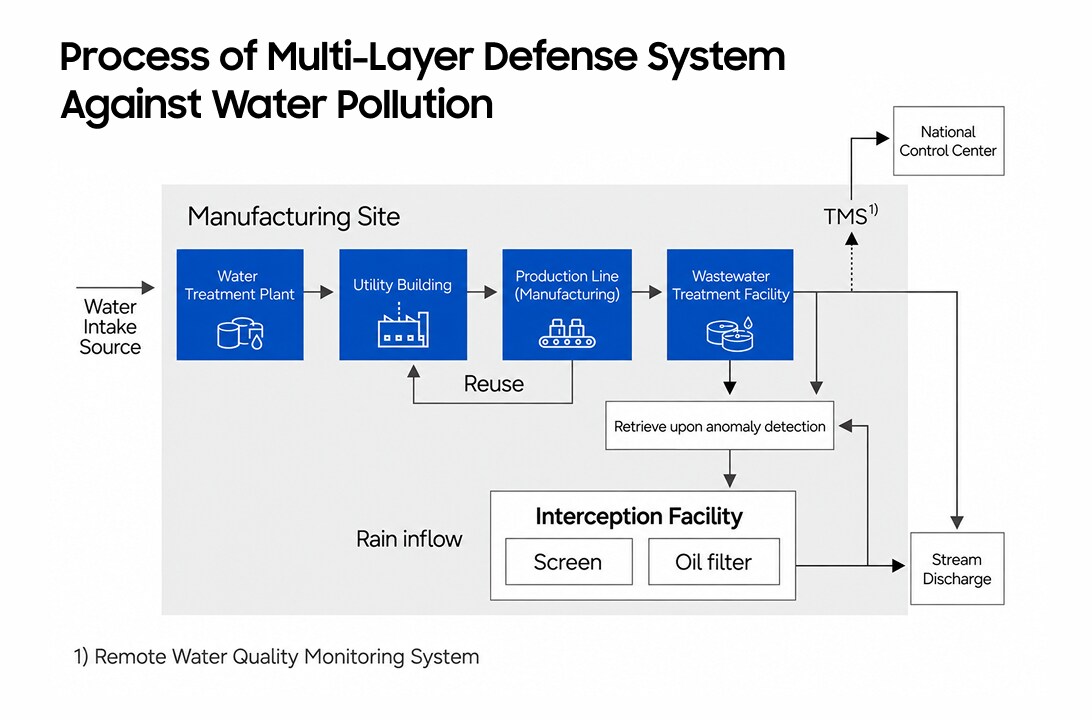
Furthermore, to prepare for potential environmental incidents that may occur at wastewater treatment plants, Samsung Semiconductor operates a three-stage containment system covering wastewater inflow, treatment, and discharge. Each containment facility measures the concentration of water pollutants in real time, and if levels exceed internal standards, wastewater is emergency-recovered through a multi-layered defense system to prevent untreated wastewater from being discharged into streams.
Furthermore, to prepare for potential environmental incidents that may occur at wastewater treatment plants, Samsung Semiconductor operates a three-stage containment system covering wastewater inflow, treatment, and discharge. Each containment facility measures the concentration of water pollutants in real time, and if levels exceed internal standards, wastewater is emergency-recovered through a multi-layered defense system to prevent untreated wastewater from being discharged into streams.
Furthermore, to prepare for potential environmental incidents that may occur at wastewater treatment plants, Samsung Semiconductor operates a three-stage containment system covering wastewater inflow, treatment, and discharge. Each containment facility measures the concentration of water pollutants in real time, and if levels exceed internal standards, wastewater is emergency-recovered through a multi-layered defense system to prevent untreated wastewater from being discharged into streams.
To prepare for emergency situations, including potential environmental incidents related to air pollutants, Samsung Semiconductor has installed backup treatment facilities across all production lines and established a real-time monitoring system to proactively prevent the possible release of pollutants.
In particular, to reduce nitrogen oxides (NOx), Samsung Semiconductor has introduced Ultra low-NOx burner and Selective catalytic reduction facilities, while applying wet treatment technologies that combine ozone oxidation and absorption processes. We are also continuously advancing our air pollutant reduction technologies by replacing existing boilers with low-energy steam supply facilities and deploying membrane-based adsorption and integrated treatment technologies at its worksites.
To prepare for emergency situations, including potential environmental incidents related to air pollutants, Samsung Semiconductor has installed backup treatment facilities across all production lines and established a real-time monitoring system to proactively prevent the possible release of pollutants.
In particular, to reduce nitrogen oxides (NOx), Samsung Semiconductor has introduced Ultra low-NOx burner and Selective catalytic reduction facilities, while applying wet treatment technologies that combine ozone oxidation and absorption processes. We are also continuously advancing our air pollutant reduction technologies by replacing existing boilers with low-energy steam supply facilities and deploying membrane-based adsorption and integrated treatment technologies at its worksites.
To prepare for emergency situations, including potential environmental incidents related to air pollutants, Samsung Semiconductor has installed backup treatment facilities across all production lines and established a real-time monitoring system to proactively prevent the possible release of pollutants.
In particular, to reduce nitrogen oxides (NOx), Samsung Semiconductor has introduced Ultra low-NOx burner and Selective catalytic reduction facilities, while applying wet treatment technologies that combine ozone oxidation and absorption processes. We are also continuously advancing our air pollutant reduction technologies by replacing existing boilers with low-energy steam supply facilities and deploying membrane-based adsorption and integrated treatment technologies at its worksites.
Established in January 2019, Samsung Semiconductor’s Air Science Research Center, formerly known as the Fine Particulate Research Institute, is developing core technologies for next-generation filters and air purification systems. Considering that air purification facilities are operated over long periods of time, the center has also begun developing low-energy air purification systems. It has completed proof of concept and secured fine dust removal performance of more than 99% in lab-scale testing.
Through ShareAIR, short for “Share the Clean AIR,” an air purification project aimed at supporting environmentally responsible worksites, Samsung Semiconductor conducted pilot testing at its Hwaseong site to verify the applicability of air purification technologies developed in the lab. The pilot confirmed fine dust removal efficiency of approximately 98% in an actual operating environment. The technology is now being expanded to supplier worksites for long-term performance verification.
Established in January 2019, Samsung Semiconductor’s Air Science Research Center, formerly known as the Fine Particulate Research Institute, is developing core technologies for next-generation filters and air purification systems. Considering that air purification facilities are operated over long periods of time, the center has also begun developing low-energy air purification systems. It has completed proof of concept and secured fine dust removal performance of more than 99% in lab-scale testing.
Through ShareAIR, short for “Share the Clean AIR,” an air purification project aimed at supporting environmentally responsible worksites, Samsung Semiconductor conducted pilot testing at its Hwaseong site to verify the applicability of air purification technologies developed in the lab. The pilot confirmed fine dust removal efficiency of approximately 98% in an actual operating environment. The technology is now being expanded to supplier worksites for long-term performance verification.
Established in January 2019, Samsung Semiconductor’s Air Science Research Center, formerly known as the Fine Particulate Research Institute, is developing core technologies for next-generation filters and air purification systems. Considering that air purification facilities are operated over long periods of time, the center has also begun developing low-energy air purification systems. It has completed proof of concept and secured fine dust removal performance of more than 99% in lab-scale testing.
Through ShareAIR, short for “Share the Clean AIR,” an air purification project aimed at supporting environmentally responsible worksites, Samsung Semiconductor conducted pilot testing at its Hwaseong site to verify the applicability of air purification technologies developed in the lab. The pilot confirmed fine dust removal efficiency of approximately 98% in an actual operating environment. The technology is now being expanded to supplier worksites for long-term performance verification.
To meet international environmental regulations and stakeholder requirements, while minimizing potential impacts on the environment and human health, Samsung Semiconductor has established the Standards for Control of Substances Used in Products. Based on these standards, the company systematically manages hazardous substances and substances of concern that may remain in its products.
All products comply with major global environmental regulations and standards, including EU RoHS, EU REACH, halogen-free requirements, and the U.S. Toxic Substances Control Act (TSCA). From the receipt of raw materials to the shipment of finished products, Samsung Semiconductor operates a structured import control and inspection process to identify and minimize risks related to hazardous substances and substances of concern in products in advance.
To meet international environmental regulations and stakeholder requirements, while minimizing potential impacts on the environment and human health, Samsung Semiconductor has established the Standards for Control of Substances Used in Products. Based on these standards, the company systematically manages hazardous substances and substances of concern that may remain in its products.
All products comply with major global environmental regulations and standards, including EU RoHS, EU REACH, halogen-free requirements, and the U.S. Toxic Substances Control Act (TSCA). From the receipt of raw materials to the shipment of finished products, Samsung Semiconductor operates a structured import control and inspection process to identify and minimize risks related to hazardous substances and substances of concern in products in advance.
To meet international environmental regulations and stakeholder requirements, while minimizing potential impacts on the environment and human health, Samsung Semiconductor has established the Standards for Control of Substances Used in Products. Based on these standards, the company systematically manages hazardous substances and substances of concern that may remain in its products.
All products comply with major global environmental regulations and standards, including EU RoHS, EU REACH, halogen-free requirements, and the U.S. Toxic Substances Control Act (TSCA). From the receipt of raw materials to the shipment of finished products, Samsung Semiconductor operates a structured import control and inspection process to identify and minimize risks related to hazardous substances and substances of concern in products in advance.
In addition, Samsung Semiconductor checks whether suppliers comply with the DS Division’s Standards for Control of Substances Used in Products. Suppliers are granted certification after undergoing an audit of their environmental quality management system. By doing business only with certified suppliers, we manage environmental risks across our supply chain in an integrated manner.
In addition, Samsung Semiconductor checks whether suppliers comply with the DS Division’s Standards for Control of Substances Used in Products. Suppliers are granted certification after undergoing an audit of their environmental quality management system. By doing business only with certified suppliers, we manage environmental risks across our supply chain in an integrated manner.
In addition, Samsung Semiconductor checks whether suppliers comply with the DS Division’s Standards for Control of Substances Used in Products. Suppliers are granted certification after undergoing an audit of their environmental quality management system. By doing business only with certified suppliers, we manage environmental risks across our supply chain in an integrated manner.

 Global