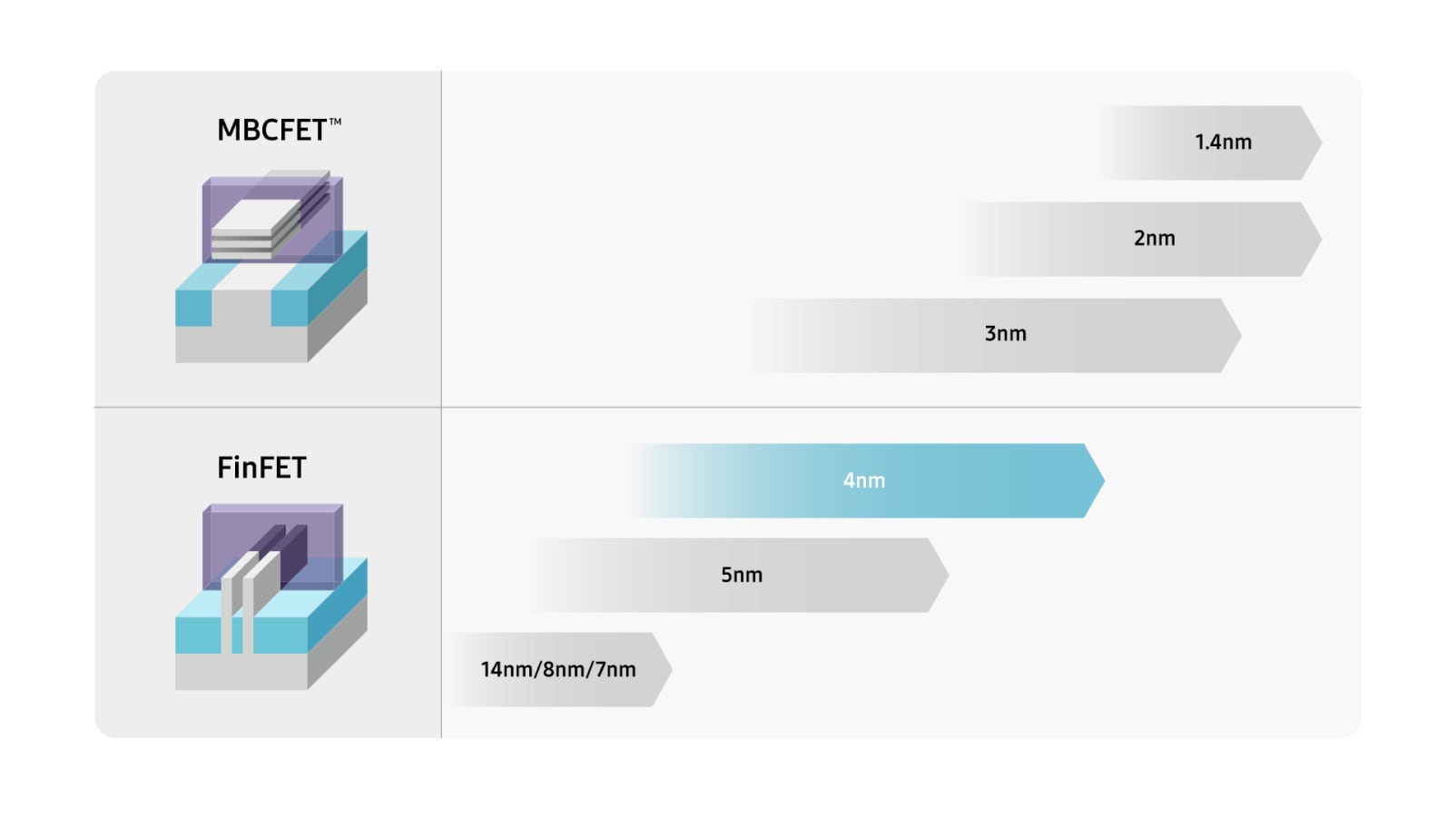
Samsung Foundry’s 4nm FinFET process represents a well-balanced optimization of performance and stability. In semiconductor manufacturing, achieving both simultaneously remains a fundamental challenge: leading-edge nodes deliver higher performance but carry initial mass production risks, while mature nodes offer stability with limited performance headroom. The 4nm process is designed to effectively address this challenge.
Positioned at the boundary between leading-edge and mature technologies, the 4nm process leverages extensive mass production experience to ensure high yield and process stability. At the same time, it offers a wide range of design options that enable optimal implementation at this node. As a result, it simultaneously enhances performance, power efficiency, and design flexibility - providing customers with a practical and reliable solution that balances performance with manufacturability.
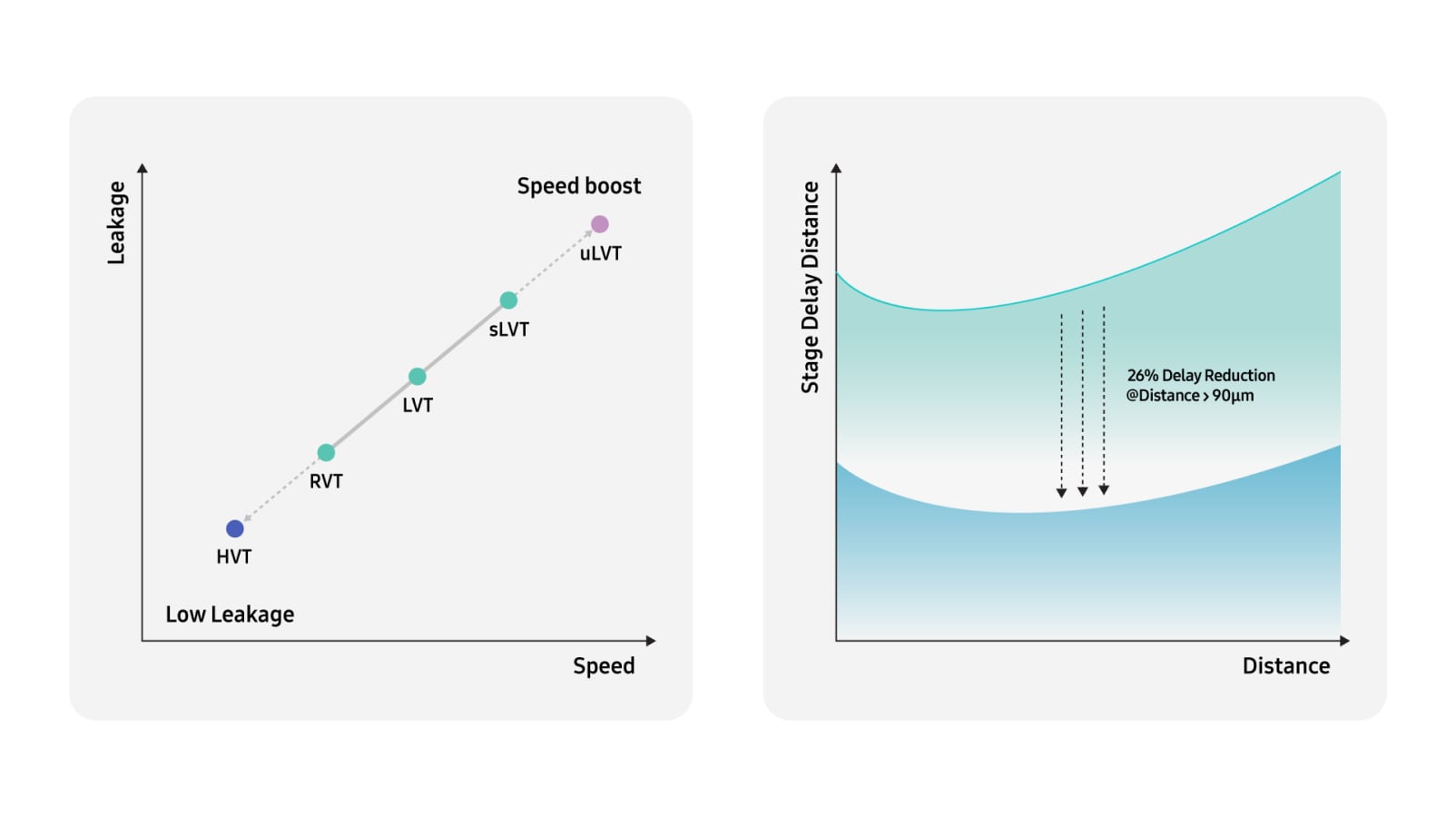
Performance gains in the 4nm process are not driven by scaling alone, but by the co-optimization of both transistors and interconnects.
On the transistor side, a wide range of Threshold Voltage (Vth) options enables enhanced design flexibility. Ultra-low Vth (uLVT) devices improve switching speed and are well-suited for high-performance designs, while high Vth (HVT) devices reduce leakage current, improving standby power efficiency. In addition, combining uLVT devices with reduced operating voltage enables further dynamic power reduction. These options allow designers to fine-tune the balance between performance and power with greater precision.
Significant improvements have also been made in the interconnect stack. As scaling progresses, increasing resistance and capacitance in metal layers can limit signal propagation speed. To address this, the 4nm process introduces additional interconnect layers with relatively larger pitch and improved Resistance-Capacitance (RC) characteristics, achieving approximately a 26% reduction in RC delay. This improvement goes beyond raw speed enhancement, enabling more efficient data flow across the entire chip.
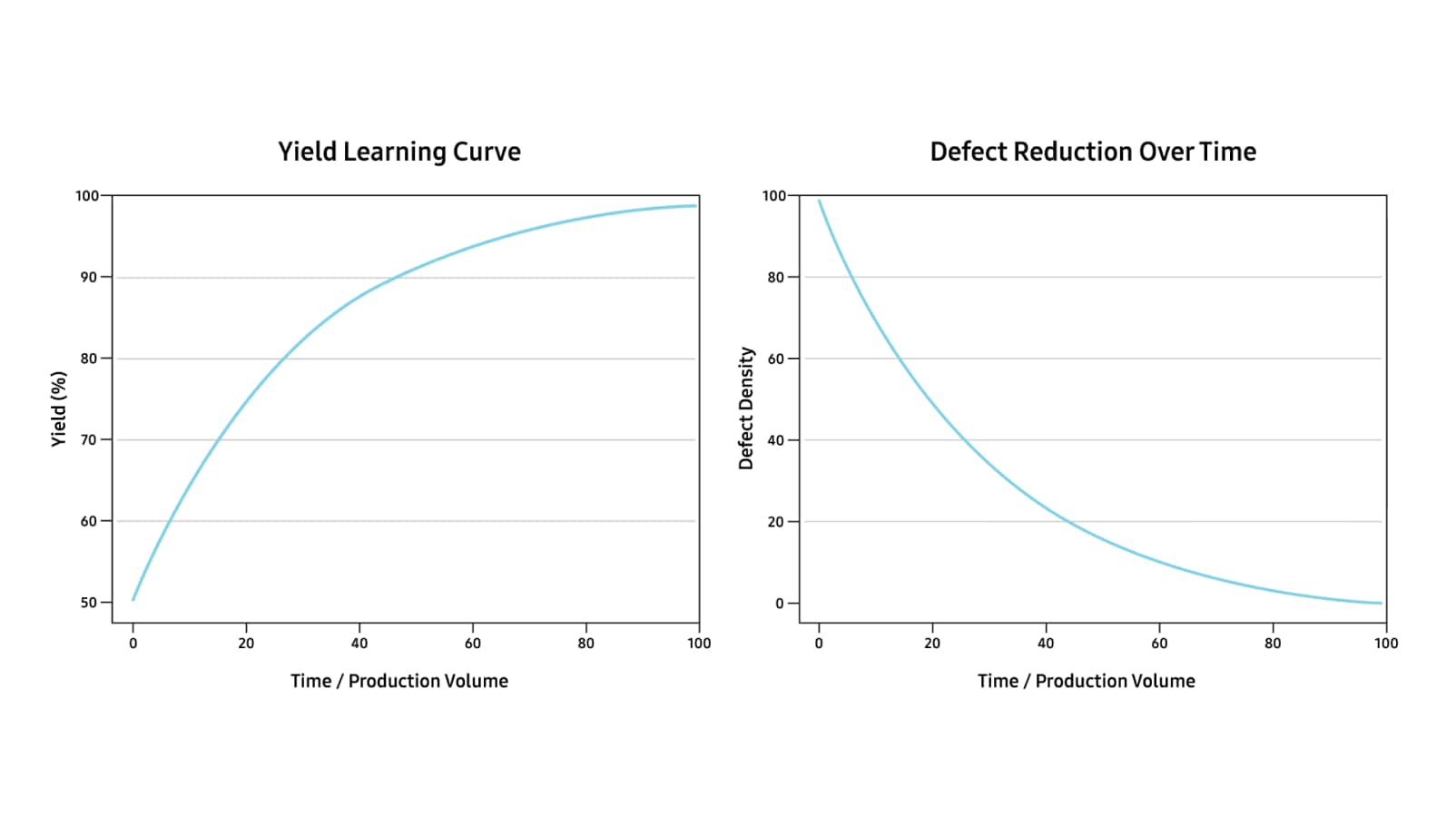
With over six years of mass production experience, the 4nm process has reached a high level of maturity, ensuring strong reliability in both process stability and yield.
As production experience accumulates, process variation is reduced and defect patterns become more predictable. This accumulated knowledge is not only used for quality control but is also incorporated into design guidelines, enabling early-stage risk mitigation.
As a result, customers benefit from both a robust manufacturing process and improved predictability in productivity and cost.
As process maturity increases, the capabilities of the 4nm node continue to expand, enabling meaningful relaxation of design constraints and greater overall design flexibility.
Unlike digital designs that rely on standard cell libraries, analog design typically involves custom layouts and is subject to stricter design rules. In the latest 4nm process, relaxed design rules in analog regions increase layout flexibility, making optimization easier and improving both area efficiency and timing margins. Reduced design iterations further contribute to shorter development cycles.
In terms of performance and power, multiple optimization paths are available. Designers can prioritize performance using high-speed options, or reduce dynamic power and thermal output by lowering operating voltage. Alternatively, higher Vth options can be used to minimize leakage power and extend battery life.
This ability to support both performance-driven and power-efficient designs within a single process is a key strength of the 4nm platform.
Samsung Foundry’s 4nm process represents the final evolution of FinFET technology prior to the transition to GAA, pushing the performance and efficiency of the FinFET architecture to its limits.
By delivering high performance, low power consumption, design flexibility, and stable yield simultaneously, the 4nm process provides a strong foundation for a wide range of applications.
These strengths extend naturally to AI, memory, automotive, and RF applications, enabling a single process platform to meet diverse-and often competing-requirements across industries.
The 4nm process is not limited to a specific application; rather, it has demonstrated its value as a versatile platform capable of meeting diverse requirements across various industries, including HBM, AI, automotive, and RF.
6-1. HBM: Optimizing Power and Thermal Efficiency
HBM4 demands extremely high bandwidth for large-scale data transfer while operating within constrained space, where power density and thermal management are critical.
In this environment, efficiency and thermal balance are often more important than peak performance. The 4nm process minimizes power loss through low-voltage operation and low-resistance interconnects, enabling highly efficient designs even in dense integration scenarios. These characteristics make it well-suited for HBM base die implementations.
In particular, base die design benefits from DTCO (Design-Technology Co-Optimization), which goes beyond traditional approaches that optimize process and design independently. By jointly optimizing both domains, DTCO enables structural solutions to trade-offs between power, interconnects, and signal integrity—challenges that cannot be addressed through scaling alone.
This integrated approach enables stable operation and high performance in highly integrated environments, while improving system-level power efficiency and thermal management.
6-2. AI / HPC: Enabling Large Die and Yield Scalability
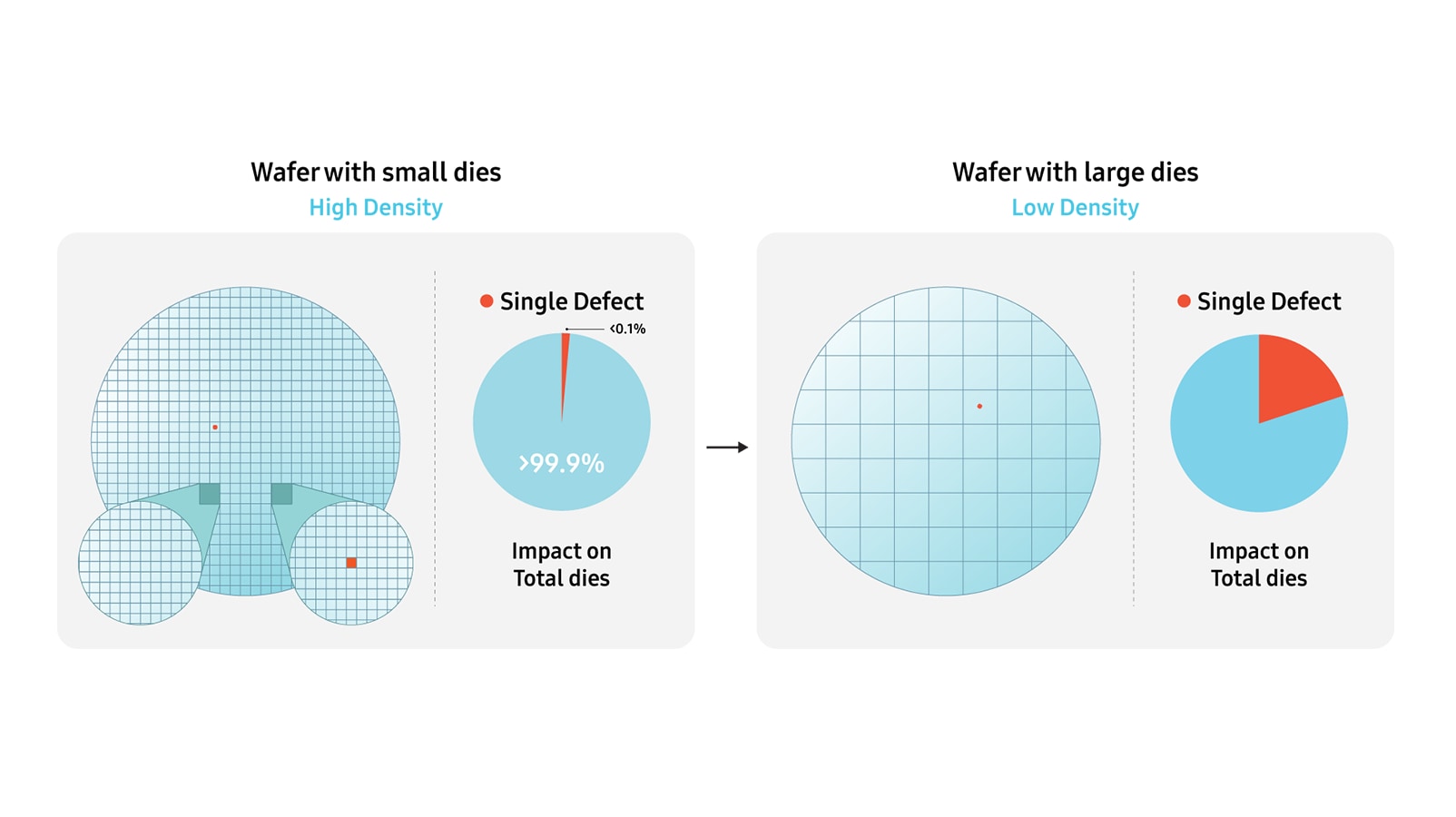
AI and HPC applications require large die architectures to maximize computational performance, significantly increasing manufacturing complexity. As die size increases, defect probability rises, making yield more difficult to maintain and placing greater demands on process uniformity and production capability.
In this context, Samsung Foundry’s 4nm process provides a strong foundation for large-scale chip design through high-density interconnects, stable power characteristics, and proven manufacturing stability. These capabilities are demonstrated in real-world AI implementations. A leading U.S. company’s LPU (Language Processing Unit), built on a large die architecture, utilizes the 4nm process to achieve both high-density interconnects and power efficiency. It meets stringent requirements for power delivery stability and thermal management while supporting high-speed data processing-demonstrating the maturity of the platform.
In high-bandwidth environments, high-performance SerDes implementation is a key indicator of process capability. Operating at tens of Gbps, SerDes is highly sensitive to process variation and requires careful balancing of Signal Integrity (SI) and power efficiency.
The ability to mass-produce large die chips integrating such high-speed interfaces highlights competitiveness in process uniformity, yield, and quality control. Maintaining consistent productivity under these conditions is a strong indicator of process maturity.
Looking ahead, next-generation LPU products are expected to enter mass production in the second half of 2026, reinforcing the continued relevance of the 4nm process in AI semiconductor applications.
6-3. Automotive: High Performance Under Power Constraints
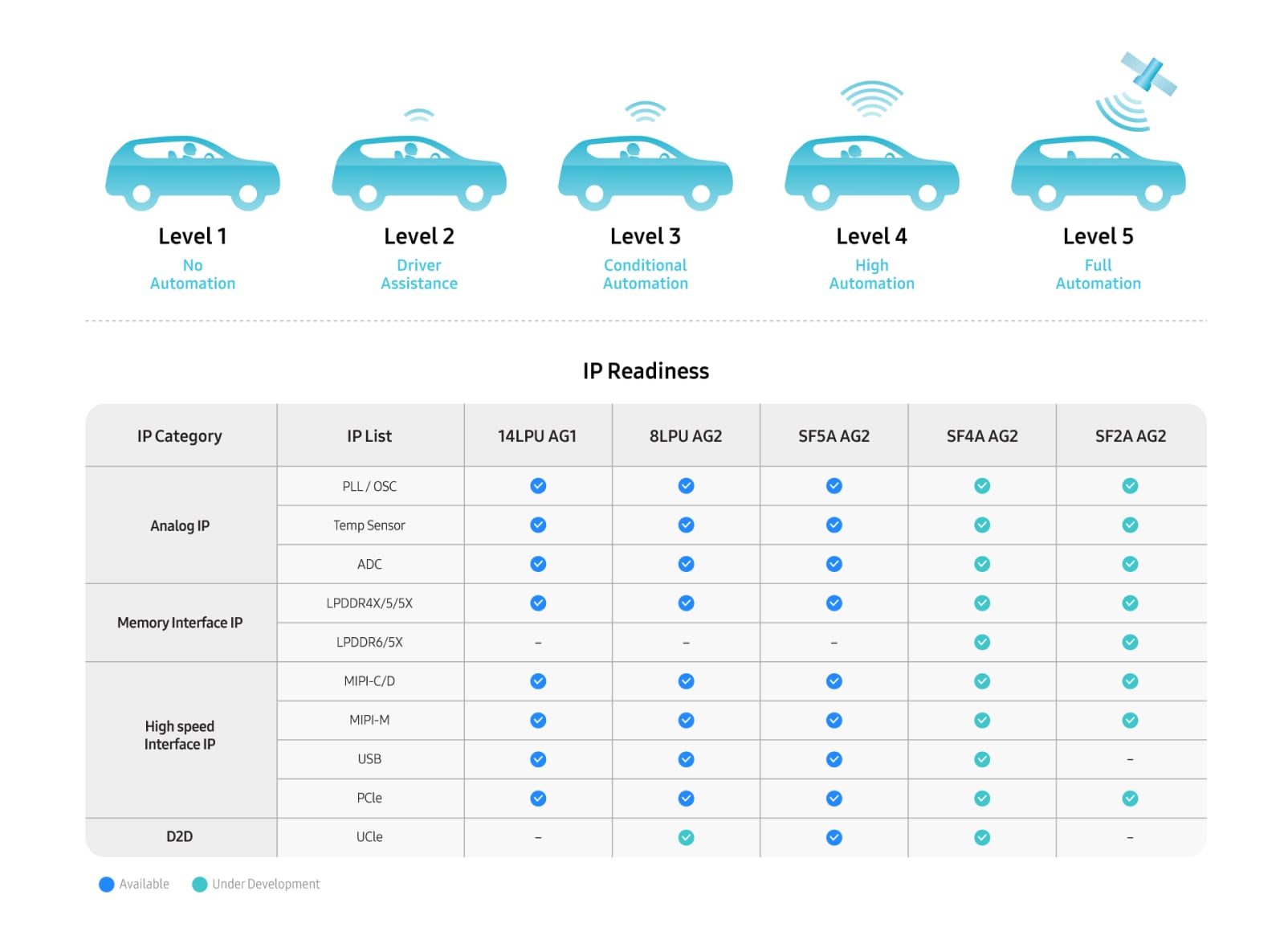
Automotive applications demand high computational performance under strict power constraints, along with exceptional reliability. As autonomous driving advances, processing requirements increase significantly. The 4nm process delivers high performance per watt through low operating voltage and efficient transistor characteristics, enabling strong computational capability within constrained power budgets while effectively managing thermal output.
Additionally, support for automotive-grade IPs-including LPDDR, PCIe, MIPI M-PHY, HDMI, and USB-enables seamless integration of ADAS and IVI systems, supporting a wide range of vehicle functions from sensor processing to high-speed data transfer. As autonomous driving evolves from Level 3 to Level 4, the 4nm process provides a scalable foundation to meet growing computational and data processing demands.
6-4. RF: Transitioning Toward Digital-Centric RF SoC
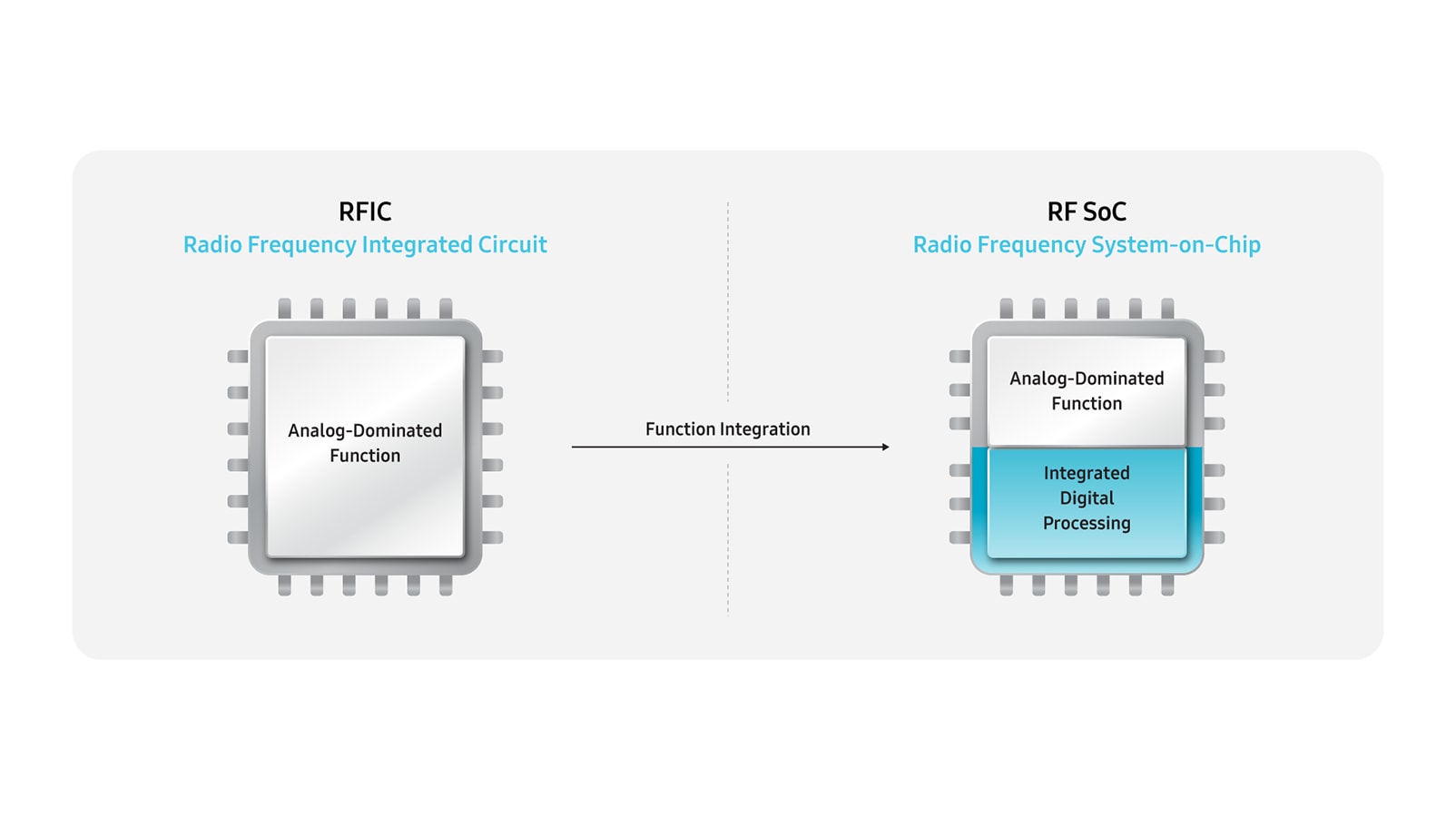
The RF market is also transitioning from traditional RFIC architectures to RF SoC designs with increasing digital integration. This shift amplifies the importance of advanced nodes. The 4nm process reduces digital area and power consumption while providing high-density interconnects for complex signal processing, making it well-suited for mixed-signal RF SoC designs.
In next-generation communication environments such as Wi-Fi 8 and 6G, increasing system complexity—driven by multi-band operation and carrier aggregation—demands both high performance and efficiency. The 4nm process supports stable operation under these conditions, enabling the realization of advanced RF systems.
Samsung Foundry’s 4nm FinFET process combines the stability of a mature node with the performance, flexibility, and power efficiency of a leading-edge technology. By addressing the core requirements across AI, HBM, automotive, and RF applications, it has established itself as a scalable platform capable of supporting diverse industries within a single process.
Ultimately, the competitiveness of the 4nm process can be summarized in one phrase:
“A scalable platform built on proven maturity.”

 Global