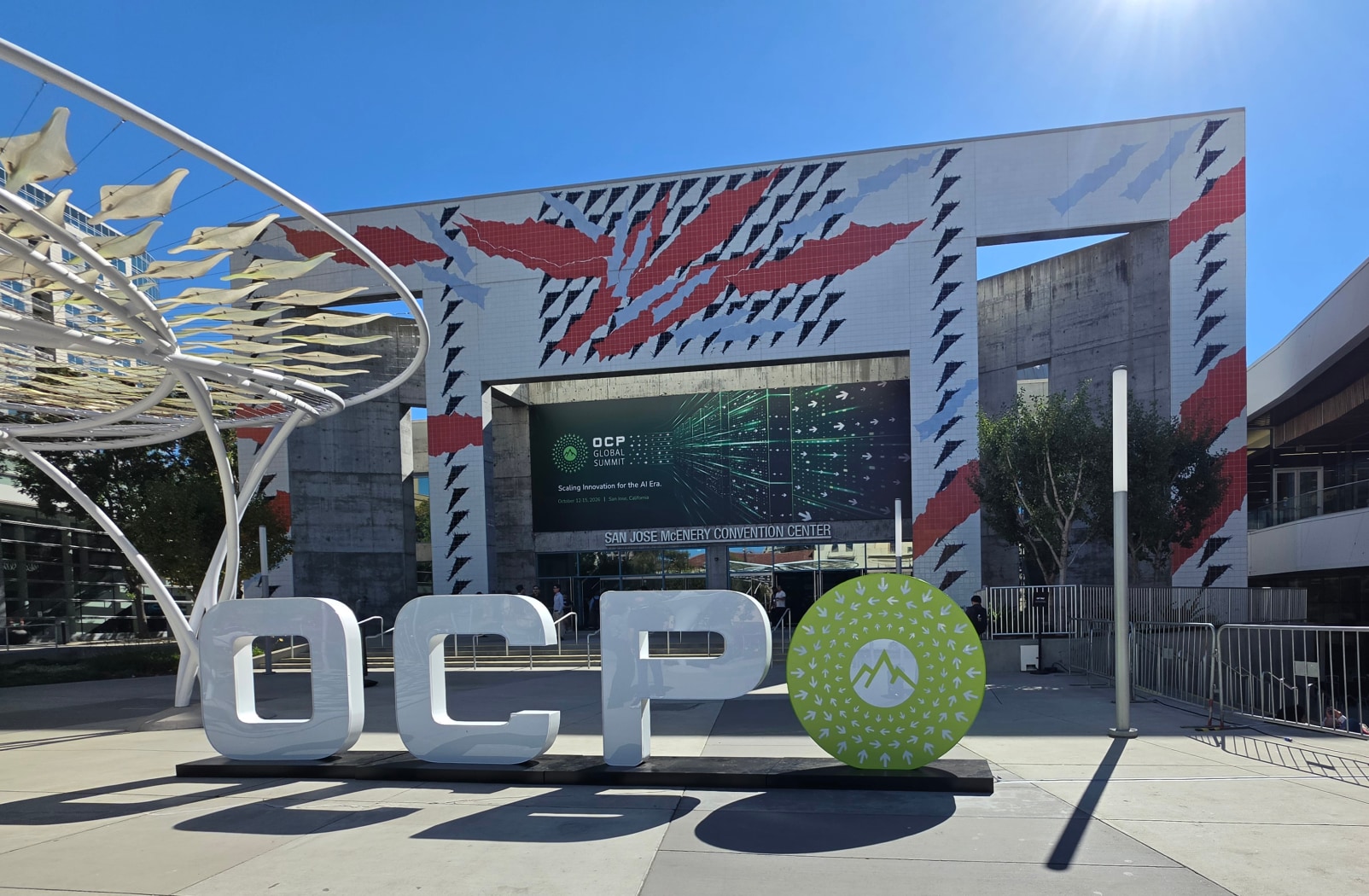
Samsung Electronics participated in OCP Global Summit 2026, held from October 12 to 15 at the San Jose McEnery Convention Center in California, U.S., showcasing next-generation memory, storage and foundry solutions designed for AI data centers and infrastructure.
Organized by the Open Compute Project (OCP), OCP Global Summit is one of the world’s largest events focused on advancing innovation and standardization in data center technologies. The 2026 Summit was held under the theme, “Scaling Innovation for the AI Era.” The event highlighted the growing importance of open standards and collaboration in expanding the AI ecosystem across the industry. With advance registration officially selling out early, the 2026 Summit reflected the growing interest in AI infrastructure and the expanding role of OCP. Reflecting this growth, OCP has confirmed that the 2027 event will move to the Moscone Center in San Francisco to accommodate growing attendance, underscoring the continued increase in investment driven by the rapid adoption of AI.
As a Diamond Sponsor, Samsung presented 13 technical sessions and 20 products and demos under the theme “Architecting AI Systems – Innovations. Together.” The sessions explored memory and storage architectures for scaling AI infrastructure, as well as collaboration with industry partners. The exhibition brought these concepts to life through real products and demonstrations, highlighting approaches to scaling AI systems more efficiently.
During the Executive Session, Hojun Shim, Vice President of the Application Engineering Team, delivered a presentation titled “Scaling Innovation for the AI Era: Keep Your Compute Running at Full Throttle with Highly Scalable Memory”↗. He presented Samsung’s co-design vision for addressing the rapidly increasing memory traffic and KV Cache requirements of the agentic AI era. Rather than treating speed, memory expansion, and persistence as separate areas of innovation, the vision connects them into an integrated memory and storage hierarchy optimized for AI workloads.
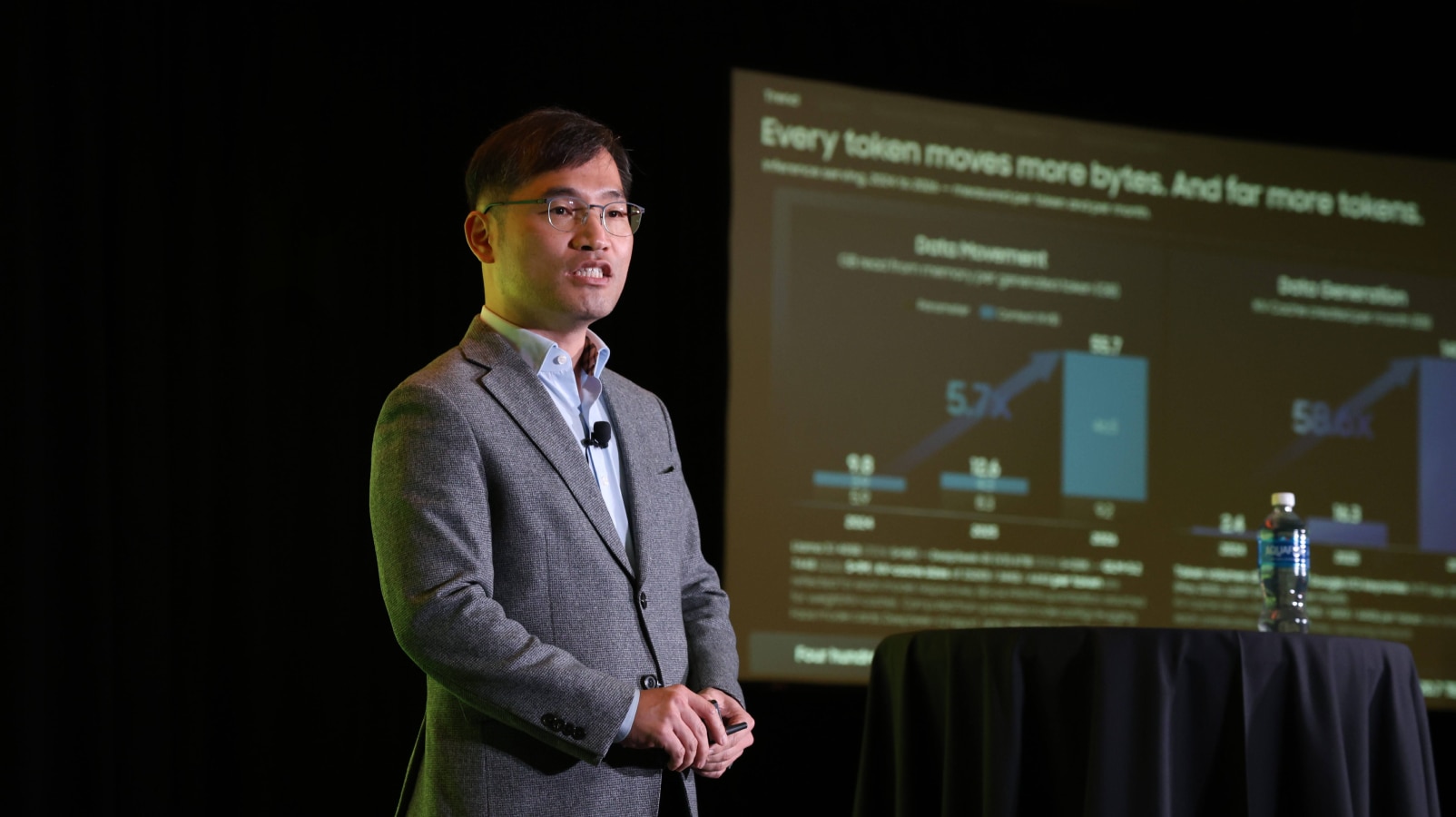
From zHBM and PIM to CXL-based memory pooling and next-generation storage, the approach connects each layer to create an infrastructure optimized for AI workloads. This vision extends beyond technology development to collaboration across an open ecosystem.
Through Samsung MAX Lab, customers and partners can evaluate and validate next-generation memory solutions in real-world data center environments. At the same time, Samsung is expanding open-source development, technology standardization, and industry collaboration through its Global Open-Ecosystem Team (GOST), further advancing the development of an open technology ecosystem. Together, these efforts demonstrate a co-design approach that spans hardware and software, memory and storage, while bringing the industry together to shape the future of AI infrastructure.
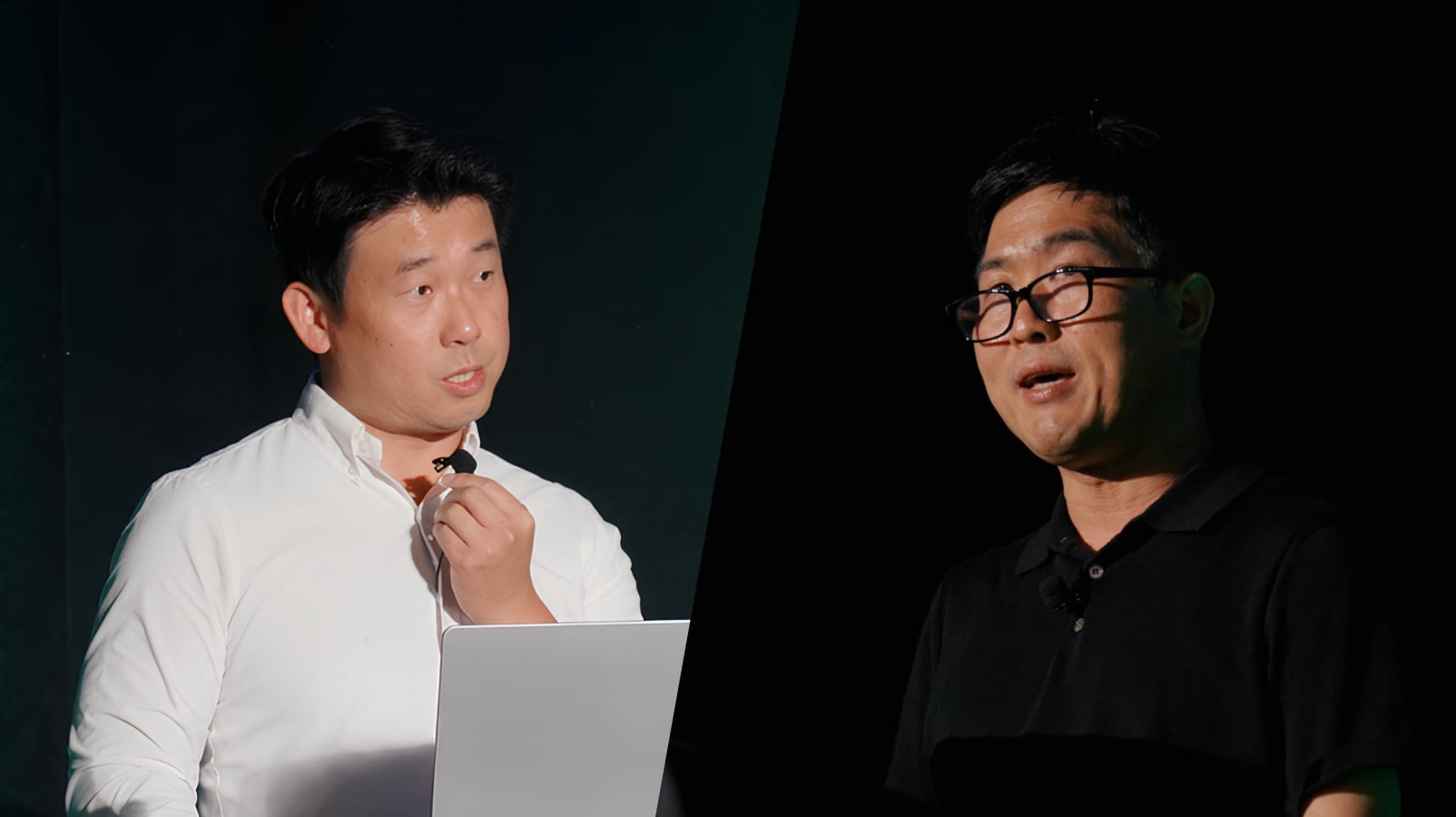
During the Expo Hall Session, Samsung introduced memory tiering technologies for efficiently managing the rapidly growing KV Cache in AI inference environments through a presentation titled
“Tiering the Agent’s Memory: From CXL Pooling to SSD-Backed KV Cache Offloading”↗.
The presentation highlighted how CXL-based memory pooling can flexibly expand memory capacity, while SSD-based KV Cache offloading can complement the limitations of conventional memory. Together, these technologies enable more flexible and scalable AI inference infrastructure. Samsung also delivered joint presentations with partners and customers across multiple technical sessions, sharing approaches to scaling AI infrastructure through open collaboration.
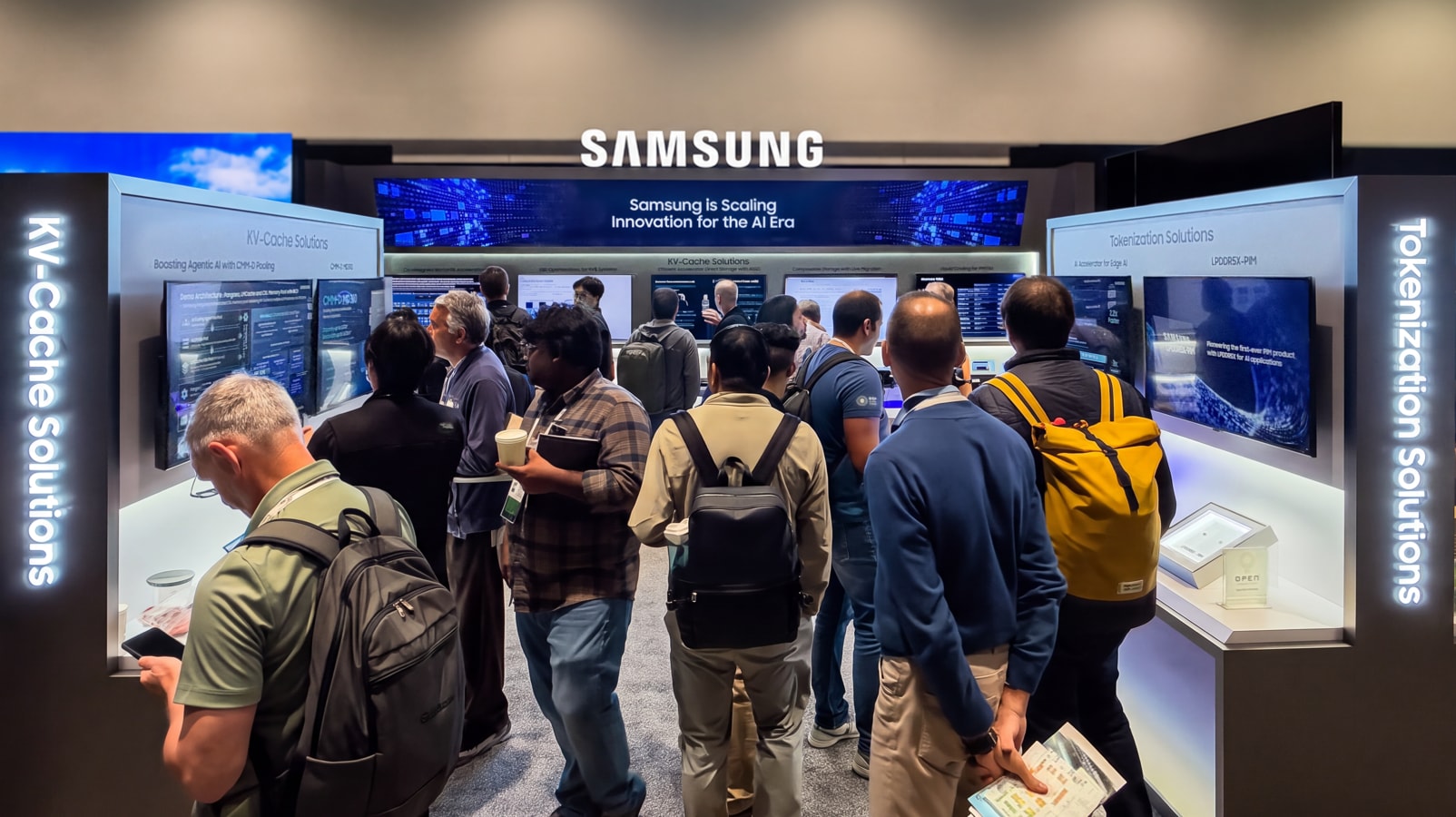
The Samsung booth at the 2026 Summit featured two dedicated zones—Tokenization and KV Cache—following the flow of AI workloads. The exhibits showcased memory and storage technologies required at each stage of AI inference, along with foundry technologies and tangible results from collaborations with industry partners.
The Tokenization Zone focused on the high memory bandwidth and computational efficiency required as AI processes user requests and generates tokens. It featured HBM and PIM technologies to address these requirements. HBM provides the high memory bandwidth needed to support large-scale AI computation, while PIM performs processing closer to the memory, helping reduce bottlenecks caused by data movement. Together, these technologies support the performance requirements of the initial data processing and tokenization stages of AI workloads. Alongside its HBM, PIM and 2nm GAA offerings, Samsung showcased NVIDIA Groq 3 LPU wafers, manufactured using Samsung’s 4nm foundry process.
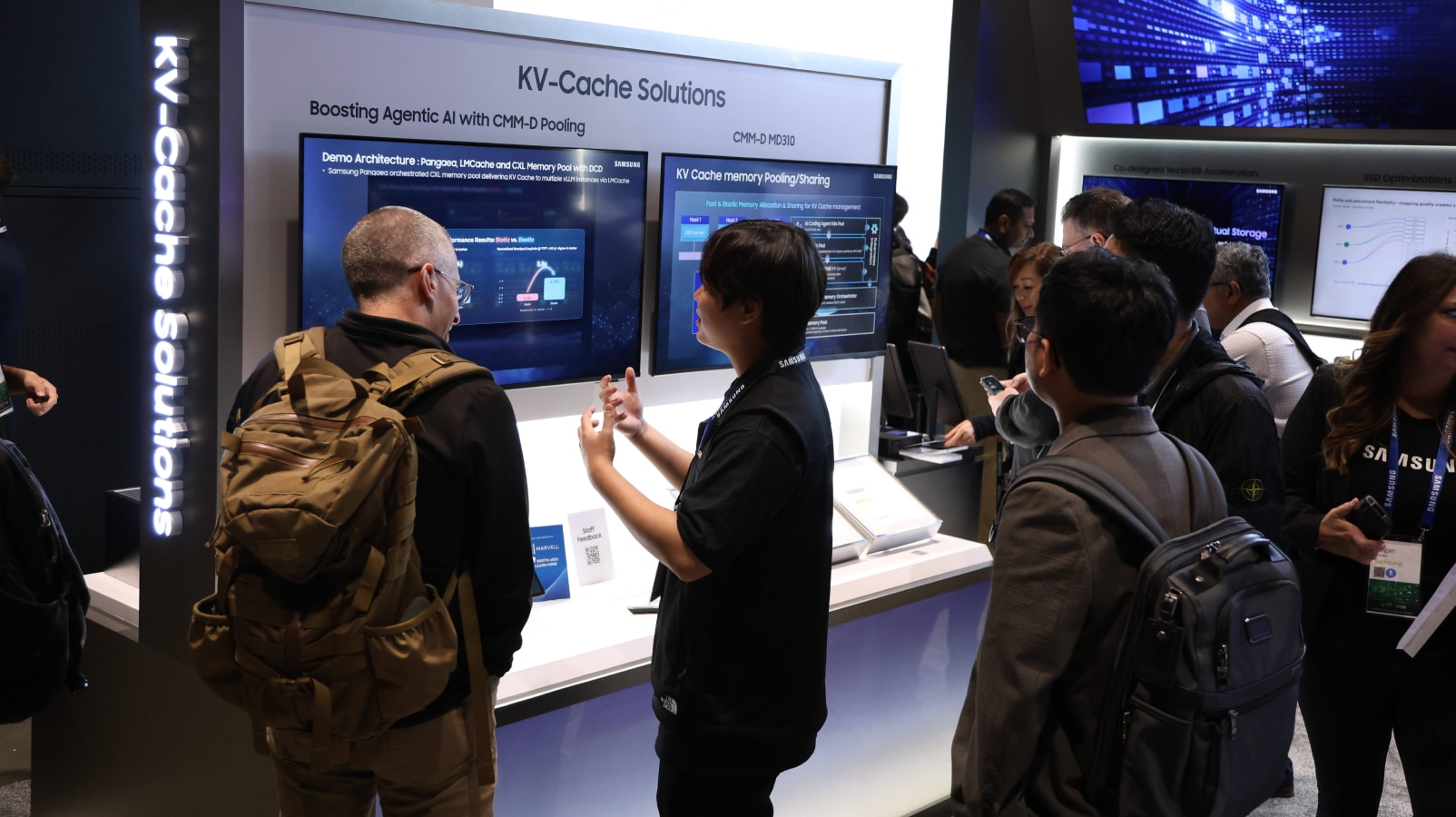
The KV Cache Zone presented an integrated approach to connecting memory and storage to efficiently manage the rapidly growing KV Cache generated during AI inference. It showcased a range of technologies for real-world AI workloads, including CMM-D-based CXL memory pooling, SSD-based KV Cache offloading, FDP (Flexible Data Placement), hardware-software co-optimization, AiSIO and composable storage. In particular, a joint demonstration with AMD showcased CMM-D-based CXL memory expansion, demonstrating how memory capacity and bandwidth can be flexibly scaled and validated in a real system environment. Samsung also demonstrated the potential of open infrastructure extending beyond hardware to software and system architecture through AiSIO, an open-source technology, and a standard NVMe-based composable storage demonstration.
Samsung's OCP collaboration extended well beyond its own booth. At the Microsoft booths, the Samsung DRAM Fault Analyzer – RAS API Demo showcased closed-loop, real-time DRAM error detection, classification, and correction for fleet-scale management plus Samsung's Dynamic Page Offlining, a novel RAS scheme presented at IEEE DSN 2026. At the NVIDIA AI Factory MGX exhibit, Samsung was featured as an official ecosystem partner of the OCP community.
These exhibits demonstrated that the approach goes beyond showcasing individual product performance. Instead, it centers on the flow of AI workloads—from tokenization to KV Cache management—and brings together memory, storage, software and system architecture through co-design.
The demonstrations also showed how ideas and technologies can be translated into real systems through joint demonstrations with industry partners, concrete performance data, and technologies based on open source and industry standards. Together, these efforts put OCP’s core values of collaboration and open ecosystems into practice through technology development and validation. They also highlight the role of collaboration in shaping the future of next-generation AI infrastructure with partners across the industry.
Looking ahead, Samsung will continue developing AI-optimized solutions spanning high-performance memory, CXL-based memory expansion, KV Cache offloading, and next-generation storage. By advancing AI infrastructure co-design across computing, memory and storage, together with open collaboration across the ecosystem, Samsung will continue contributing to the evolution of the AI ecosystem.

 Global
