This year, Samsung Semiconductor earned seven CES Innovation Awards®, demonstrating how semiconductor technology continues to drive innovation across industries and enhance everyday life far beyond the functions of individual components. Among the honorees, the S3SSE2A—winner of the Best of Innovation Award in the Cybersecurity category and an Honoree in the Embedded Technologies category—stands out as a foundational security platform engineered to safeguard sensitive data against today’s cyber threats as well as tomorrow’s quantum-enabled attacks.
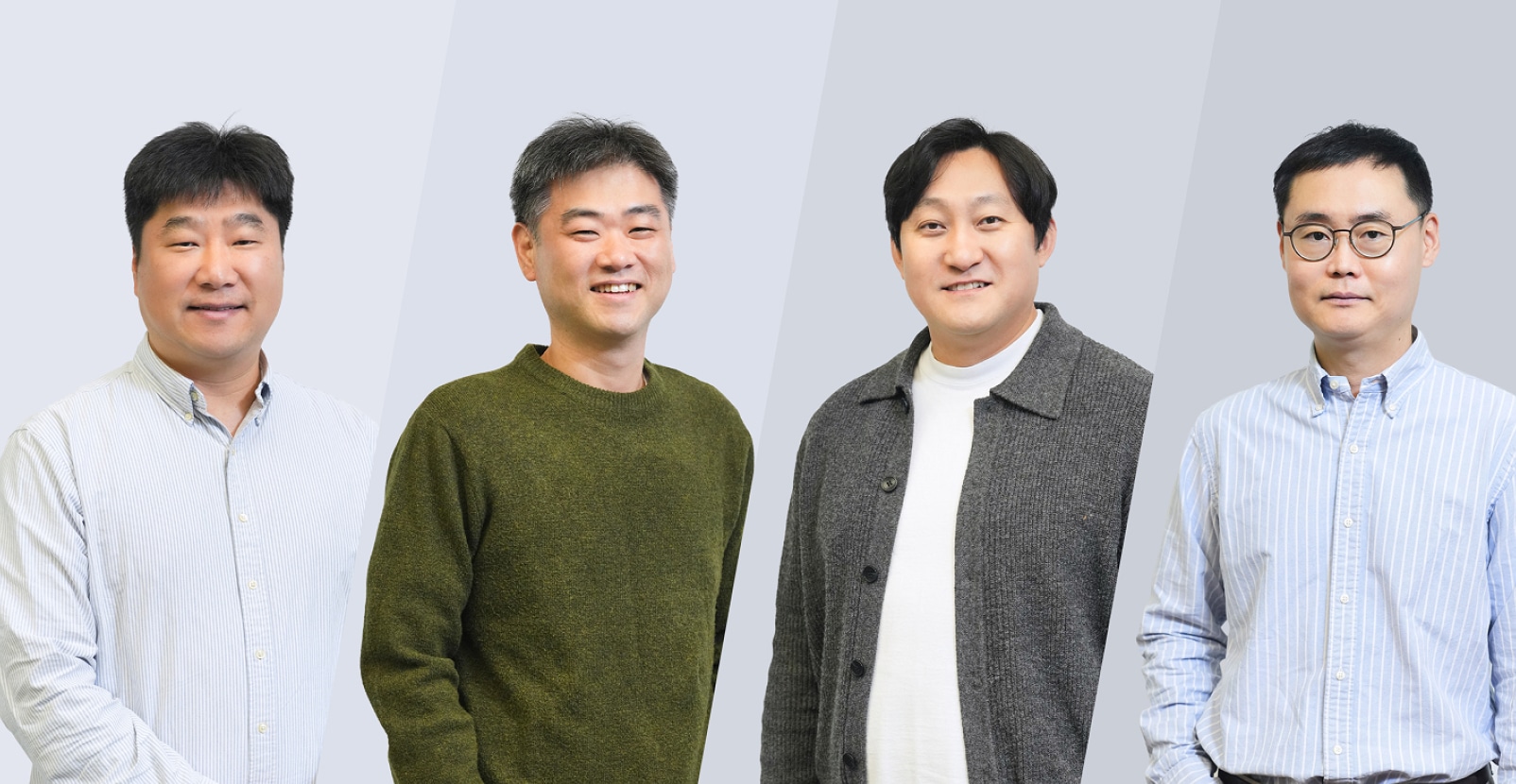
We spoke with the developers behind this achievement: Task Leaders Stanley Yoo and Hyunjae Kang, and engineers Jicheol Kim and In Lee from the Security & Power Product Development Team of Samsung System LSI.
Q. To start, could you introduce S3SSE2A?
Stanley Yoo: Samsung’s S3SSE2A is the industry’s first Secure Element to implement hardware-based Post-Quantum Cryptography (PQC) and has received CC certification¹⁾. It is recognized as having one of the highest levels of security among commercial products available today. Built in a hybrid structure that supports both existing security algorithms and PQC, it is designed to defend against today’s cyberattacks while preparing for the quantum threats of tomorrow.
Q. Beyond hardware-based PQC, what sets S3SSE2A apart from existing security chips?
Hyunjae Kang: Most current security chips rely on public-key cryptography such as RSA and ECC²⁾. Once quantum computing becomes commercially viable, these algorithms could be decrypted quickly and lose their effectiveness. The biggest differentiator of S3SSE2A is that it embeds PQC directly in 'hardware' to counter this threat. By supporting both RSA/ECC and PQC in a hybrid architecture, it maintains compatibility with existing systems while enabling a seamless transition to next-generation security infrastructure.
Q. How does Post-Quantum Cryptography (PQC) differ from existing cryptographic technologies, and why is it important?
Jicheol Kim: The key difference is quantum safety. Current RSA and ECC rely on mathematically difficult problems—like integer factorization and discrete logarithms—that quantum computers can solve rapidly. This makes today’s encryption potentially vulnerable in the future. PQC, however, is based on lattice-based mathematical structures that remain difficult to break even with quantum computing. Furthermore, S3SSE2A integrates PQC directly into hardware, and this delivers faster, more stable cryptographic operations and significantly enhances long-term data protection.
In Lee: Some may think quantum computing is still far off, but “Harvest Now, Decrypt Later” attacks—where encrypted data is collected today and decrypted in the future once quantum capabilities mat+E21ure —are already a real risk. Preparing early is essential. The hardware-based PQC in S3SSE2A isn’t just a forward-looking idea; it is foundational infrastructure for future-proofing the quantum era. Security-critical industries like government, finance, automotive, IoT will inevitably transition to PQC, and S3SSE2A enables that shift to begin now.
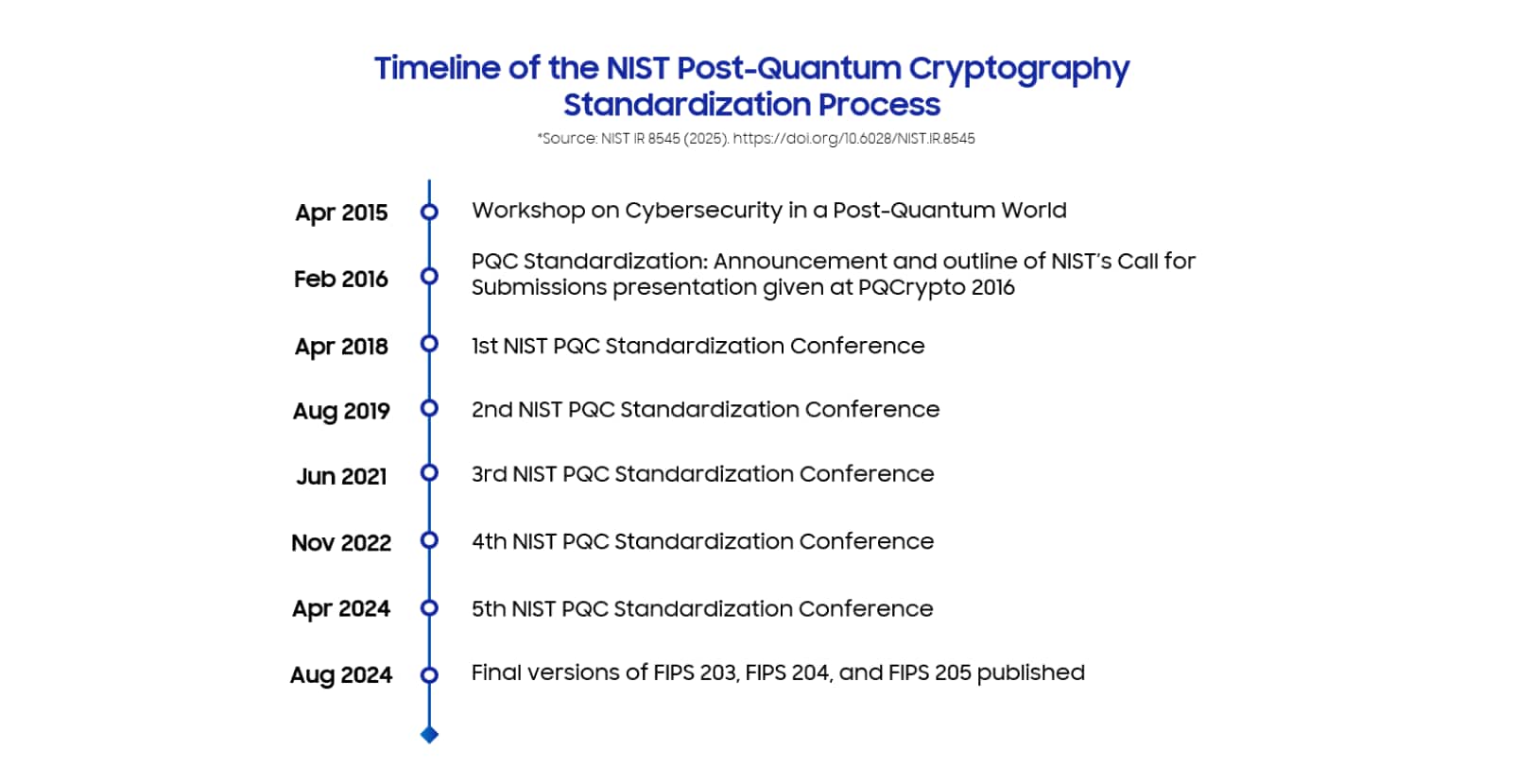
Q. PQC standardization is still progressing globally. How did this influence the development of S3SSE2A and what challenges did you face?
Hyunjae Kang: With global standards still evolving, we designed S3SSE2A to be adaptable from the outset. We continuously monitored international standardization efforts in real time and built an internal verification system for leading candidate algorithms, including NIST selections. By modularizing the chip architecture and enabling algorithm-replacement flexibility, we ensured the design remains robust and ready for future standards.
Jicheol Kim: From the early development stage, security experts, hardware designers, firmware engineers, and international certification teams collaborated closely. With weekly algorithm-update meetings and ongoing performance verification, we not only stayed aligned with global developments but actively anticipated them. As a result, S3SSE2A demonstrates the practical viability of post-quantum security and stands as the industry's first to bring hardware-based PQC to mobile devices, marking a meaningful milestone.
Q. The S3SSE2A is described as a “hardware–software integrated turnkey security solution.” What benefits does this offer customers?
In Lee: It means hardware and software were designed together from the very beginning. In many traditional solutions, chips and software are developed separately, which can introduce integration gaps. Our approach eliminates those risks by offering a seamlessly integrated platform that includes cryptographic algorithms, firmware, and protocols.
Stanley Yoo: This integrated “one-stop” approach offers three key advantages. First, it delivers higher development efficiency, allowing customers to deploy the solution immediately without creating separate security modules or firmware. Second, it provides stronger security by keeping all data flows within the integrated system, significantly reducing the attack surface and increasing resistance to physical and logical intrusions. Third, it simplifies updates and scalability by maintaining hardware–firmware compatibility across versions, enabling seamless adoption of new cryptographic features or algorithms. Altogether, S3SSE2A allows customers to focus on core service innovation while relying on a robust, future-ready security foundation.
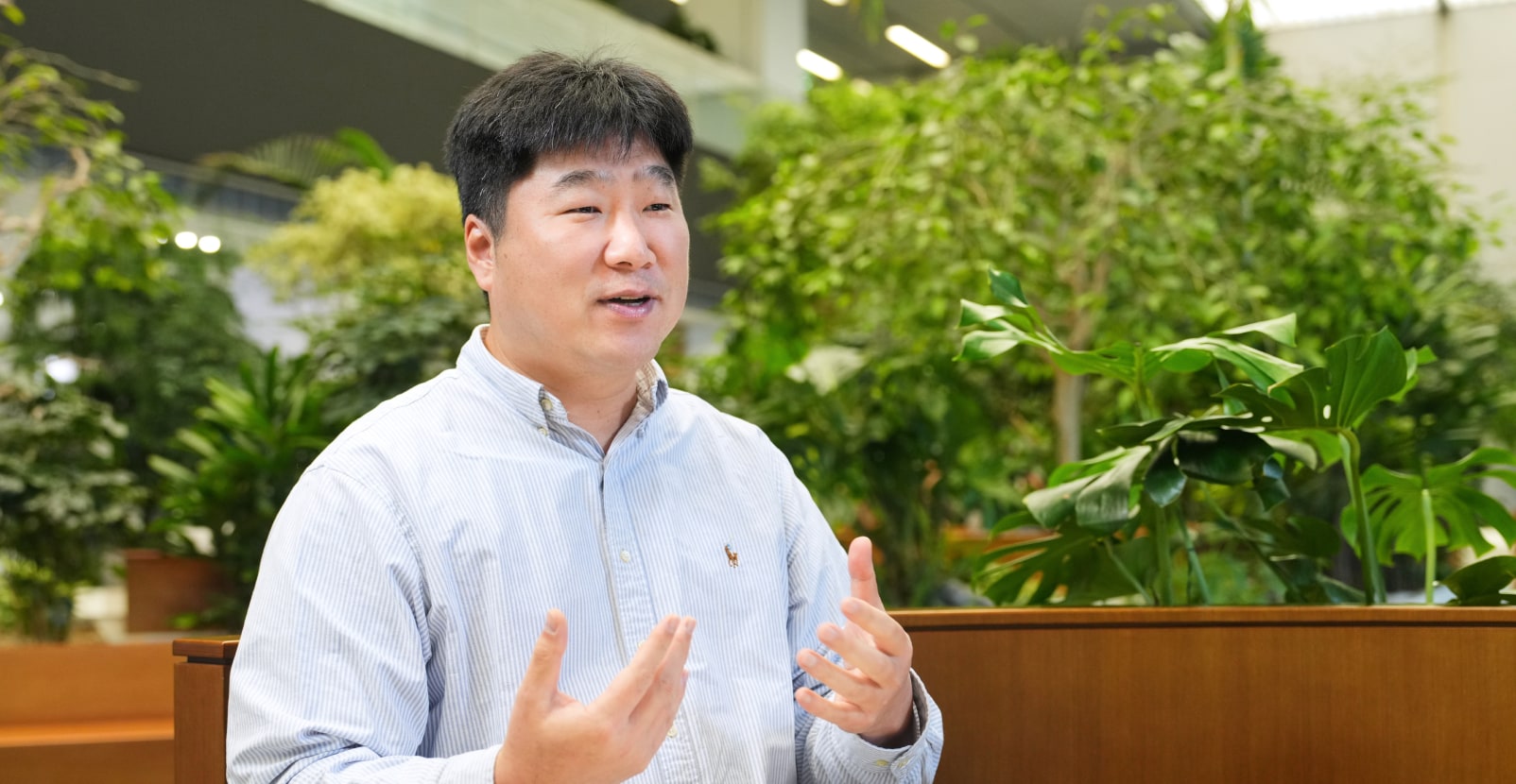
Q. S3SSE2A can be applied across mobile, IoT, and connected devices. Where do you expect it to have the greatest impact?
Jicheol Kim: The chip is widely applicable across any sector requiring strong security, but we expect especially meaningful impact in mobile devices, IoT, industrial control systems, and financial terminals. Smartphones and tablets perform numerous sensitive tasks—authentication, payments, digital key management—and S3SSE2A strengthens these functions with PQC-enhanced security.
Hyunjae Kang: IoT environments consist of vast networks of small, interconnected devices where one vulnerability can affect the entire system. S3SSE2A is ultra-compact and low-power, making it ideal for IoT hardware while providing robust hardware-level encryption. In industrial environments—like smart factories—real-time PQC-based authentication and high-speed encryption are essential for ensuring stable, uninterrupted operations.
Q. As the quantum computing era approaches, how do you see the future of security evolving?
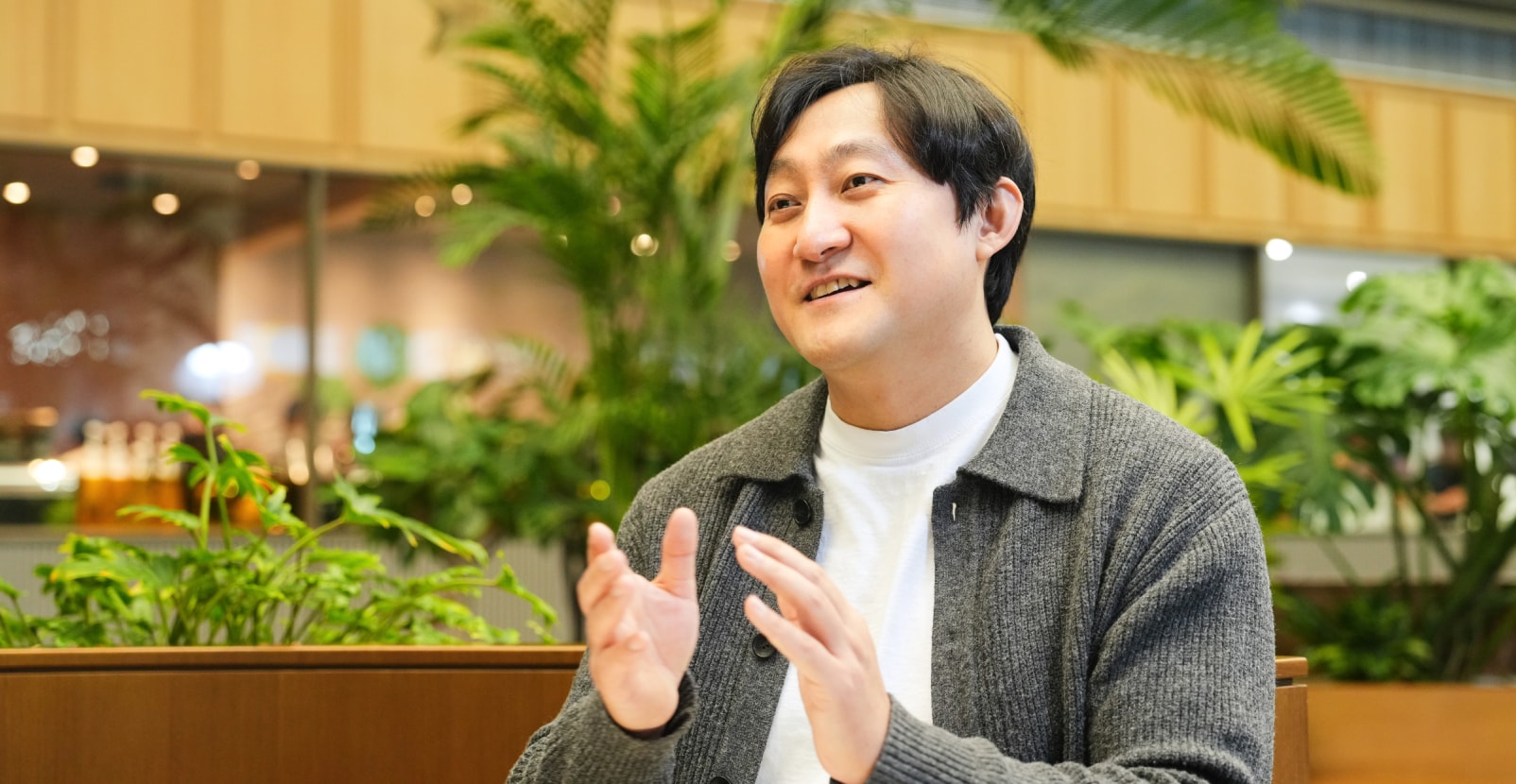
In Lee: We expect two major shifts. First, cryptographic standards will transition from algorithms based on mathematical difficulty to PQC algorithms designed for quantum-safe environments. Second, core security functions will increasingly move into hardware, ensuring stronger protection and improved performance. In the future, chips will have security built into their architecture rather than relying heavily on software-based encryption.
Stanley Yoo: We are preparing proactively for that future today. Our hybrid approach supports PQC alongside today’s algorithms and aims to serve as an integrated security platform scalable across cloud and IoT ecosystems. This allows users to benefit from the most secure cryptographic systems without needing to understand or manage the complexity behind them. Ultimately, security must be an essential infrastructure that establishes trust. With S3SSE2A, we aim to lead that transformation.
The S3SSE2A goes beyond a conventional security chip—it marks a pivotal step toward safeguarding data in the coming era of quantum computing. Recognized as a CES Innovation Awards® 2026 Best of Innovation winner and Honoree, Samsung’s S3SSE2A will be showcased at the Las Vegas Convention Center from January 6 to 9, 2026.
Learn more about Samsung’s S3SSE2A.
* All images shown are provided for illustrative purposes only and may not be an exact representation of the product. All images are digitally edited, modified, or enhanced.
* All product specifications reflect internal test results and are subject to variations by user's system configurations. Actual performance may vary depending on use conditions and environment.
1) CC EAL: A numerical grade (from EAL1 to EAL7) assigned to an IT product or system after completing a security evaluation based on the Common Criteria, an international standard.
2) RSA (Rivest-Shamir-Adelman) is a public-key cryptography method based on the computational difficulty of integer factorization and ECC (Elliptic Curve Cryptography) is a public-key cryptography method that utilizes the mathematical structure of elliptic curves.

 Global