This year, Samsung Semiconductor earned seven CES Innovation Awards®, demonstrating how semiconductor technology continues to drive innovation across industries and enhance everyday life far beyond the functions of individual components. Among the honorees, ISOCELL HP5 – the first 200-megapixel image sensor in the industry to feature the smallest 0.5㎛ pixels and recognized in the Imaging category – underscores Samsung’s leadership in next-generation image sensor technology.
We spoke with the key developers behind this innovation: Task Leaders Seokyong Hong from the Sensor Design Team; Chanhyung Kim from the Sensor PA Team; and engineers Junoh Kim from the Pixel Development Team and Sangwoo Byeon from the Sensor Solution Team.


Q. To start, could you introduce the ISOCELL HP5?
Seokyong Hong: Samsung’s ISOCELL HP5 is the first 200MP mobile image sensor to adopt 0.5㎛ pixels – the smallest in the industry to date. It supports the advanced camera capabilities expected in premium smartphones, from ultra-high-resolution capture to enhanced zoom and single-frame HDR. As a result, users can take sharper, more detailed photos across a wide range of lighting conditions, with consistently high-quality imaging in every scenario.


Q. Smaller pixels typically capture less light. What innovations did you incorporate into the ISOCELL HP5 to overcome this challenge?
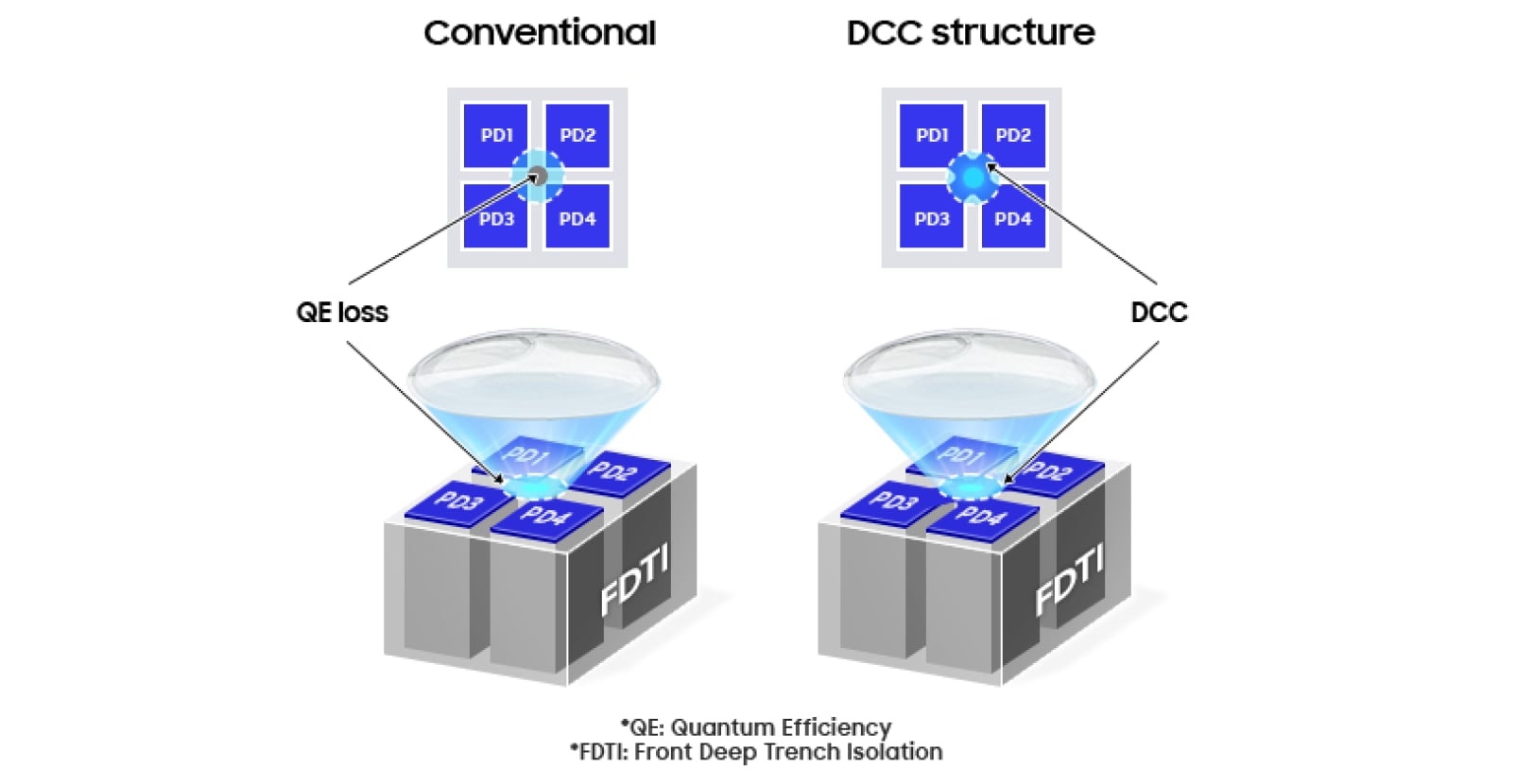
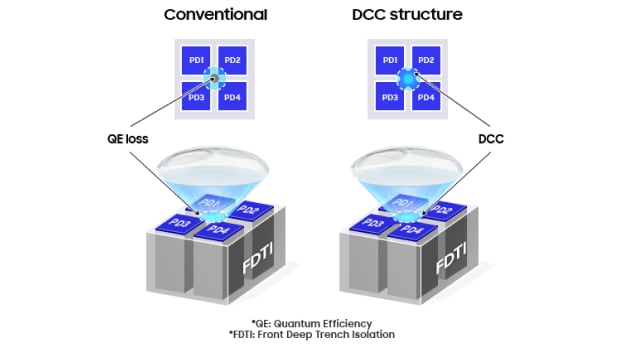
Chanhyung Kim: To address the sensitivity challenges associated with 0.5㎛ pixels, we incorporated multiple innovations from the earliest stages of development to ensure the ISOCELL HP5 maintains strong image quality. Using a Deep Trench Isolation Center Cut (DCC) structure, High Sensitivity DTI (High-S), TiO₂¹⁾, and HRI²⁾ lenses, we designed the sensor to absorb more light efficiently within small pixels and maintain Full Well Capacity (FWC). In particular, High-S enhances the conventional DTI structure to improve light reflection. Combined with these structural improvements, we were able to overcome the typical limitations of light capturing in small pixel designs.


Q. The ISOCELL HP5 incorporates a wide range of advanced technologies. Could you explain how the DCC structure specifically impacts image quality, and what improvements end users are most likely to notice in real-world use?
Junoh Kim: The DCC structure secures an area of the photodiode (PD) that can receive light and Front Deep Trench Isolation (FDTI) expands the PD volume vertically to capture more signal. Dual Vertical Transfer Gate (D-VTG) improves the transfer of accumulated electrons to the Floating Diffusion (FD). These features help maintain a stable FWC even with extremely small pixels.
By applying the DCC structure, we increased the sensor’s Conversion Gain (CG), enabling clearer, more detailed images in low-light conditions. In dark settings, photos often show grainy spots – this visual distortion is known as noise. DCC reduces this noise while simultaneously boosting pixel sensitivity, enabling the sensor to capture more light.
Sangwoo Byeon: HDR performance is that end users are especially likely to notice. The ISOCELL HP5 supports 13-bit output, enabling richer color combinations and finer detail. It also uses a 1:8 CG structure to achieve a wide dynamic range, allowing the sensor to capture both bright and dark areas more effectively. In addition, it can simultaneously capture long and short exposures, ensuring sharp images even when photographing moving subjects.
Seokyong Hong: Another key advantage is that this level of HDR performance is achieved with low power consumption. Despite its high pixel count, the sensor is designed for efficient power use and supports both single-frame 14-bit HDR and staggered HDR modes. In preview mode, it consumes about 20% less power than previous generations³⁾, helping extend battery life while maintaining exceptional image quality.
Q. Developing the ISOCELL HP5, which integrates many advanced technologies on top of its 0.5㎛ pixels, must have been challenging. What difficulties did you face during development, and how did you overcome them?
Junoh Kim: As pixel sizes shrink, the placement of components and wiring within a limited space becomes increasingly complex. Finding the optimal layout while keeping the manufacturing process consistent with previous-generation products was a major challenge. Balancing the new pixel architecture with established production methods required extensive fine-tuning and iteration.
Chanhyung Kim: Smaller pixels also mean less light reaches the sensor, which can reduce performance. We addressed this by introducing new materials and structural enhancements to maximize light absorption. Some of these changes led to unexpected side effects, and in some cases, we had to revisit and refine the process from the ground up. It was truly a team effort—and thanks to the collaboration of multiple teams, we successfully developed the industry’s first image sensor using 0.5㎛ pixels - the ISOCELL HP5.


Q. With smaller pixels, the overall sensor size also shrinks. How did this affect device design?
Sangwoo Byeon: The 0.5㎛ pixels are optimized for a 1/1.56-inch optical format, a size previously used mostly for 50MP sensors. With ISOCELL HP5, we achieved 200MP while keeping the module slim, making it suitable for smartphone telephoto camera systems.
Seokyong Hong: In premium smartphones, zoom performance is becoming increasingly important. The slim module helps maintain a thin, sleek device design while still delivering high-quality imaging for high-magnification zoom photography.


Q. As the push for smaller pixels and higher resolution accelerates, what innovations do you foresee shaping the future of image sensor technology beyond ISOCELL HP5?
Seokyong Hong: Demand for compact, high-resolution sensors will continue, along with expectations for improved HDR. We anticipate ongoing innovation in HDR technology to better address real-world lighting challenges and user needs.
Junoh Kim: Ultimately, future development will focus on solving real user pain points, especially in mobile environments – reducing noise in low-light scenes, expanding dynamic range in bright conditions, and further enhancing both pixel miniaturization and resolution. These continuous advancements will shape the next generation of mobile imaging.
Chanhyung Kim: Ultimately, our goal is to develop sensors that surpass the capabilities of the human eye. We will continue advancing pixel miniaturization while improving light-capture efficiency, enabling clear, accurate imaging even in complex or mixed lighting environments. ISOCELL HP5 represents just the beginning of this effort to push the boundaries of image sensor technology.
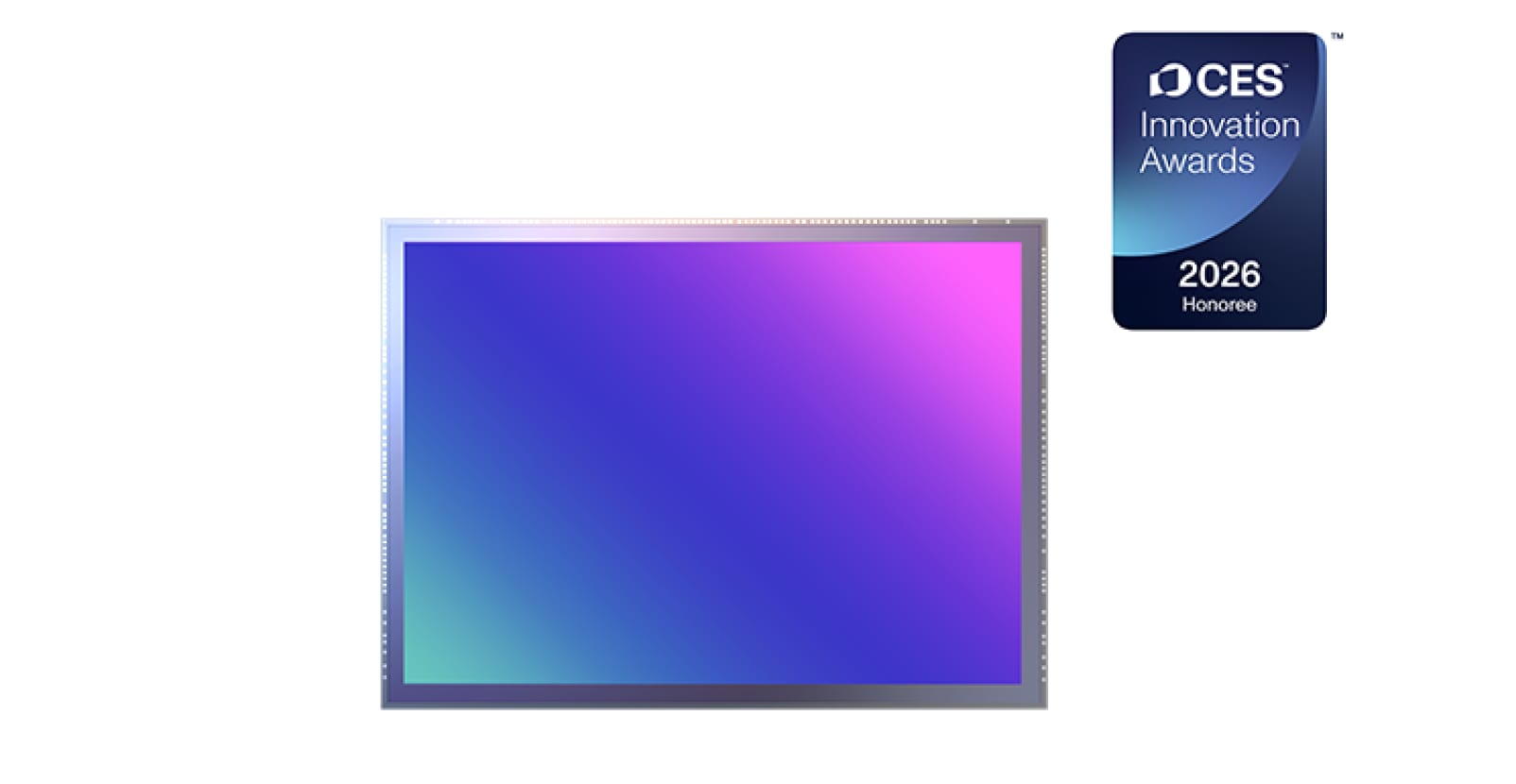
ISOCELL HP5 delivers more than ultra-high resolution – it enables compact camera modules, wider dynamic range, and improved low-light performance for everyday smartphone photography. Honored with a CES Innovation Award®, Samsung’s ISOCELL HP5 will be showcased at the Las Vegas Convention Center during CES from January 6–9, 2026.
Learn more about Samsung’s ISOCELL HP5
* All images shown are provided for illustrative purposes only and may not be an exact representation of the product. All images are digitally edited, modified, or enhanced.
* All product specifications reflect internal test results and are subject to variations by user's system configurations. Actual performance may vary depending on use conditions and environment.
1) Titanium Dioxide, used in lens or layer structures to improve light absorption and reduce reflection.
2) High Refractive Index lens, used to better focus light onto the photodiode.
3) Compared with ISOCELL HP2, ISOCELL HP3, and ISOCELL HP9; reduction levels differ by model.

 Global