
Samsung HBM (High Bandwidth Memory) integrates advanced TSV-based stacking with high-throughput memory performance to accelerate AI training and HPC workloads. Designed for data-intensive and highly parallel operations, the HBM family delivers the ultra-fast, seamless data movement needed to power next-generation AI infrastructure. With its stacked architecture and wide interface, Samsung HBM improves system-level efficiency across the industry’s most complex workloads.
Samsung HBM (High Bandwidth Memory) integrates advanced TSV-based stacking with high-throughput memory performance to accelerate AI training and HPC workloads. Designed for data-intensive and highly parallel operations, the HBM family delivers the ultra-fast, seamless data movement needed to power next-generation AI infrastructure. With its stacked architecture and wide interface, Samsung HBM improves system-level efficiency across the industry’s most complex workloads.
Samsung HBM (High Bandwidth Memory) integrates advanced TSV-based stacking with high-throughput memory performance to accelerate AI training and HPC workloads. Designed for data-intensive and highly parallel operations, the HBM family delivers the ultra-fast, seamless data movement needed to power next-generation AI infrastructure. With its stacked architecture and wide interface, Samsung HBM improves system-level efficiency across the industry’s most complex workloads.
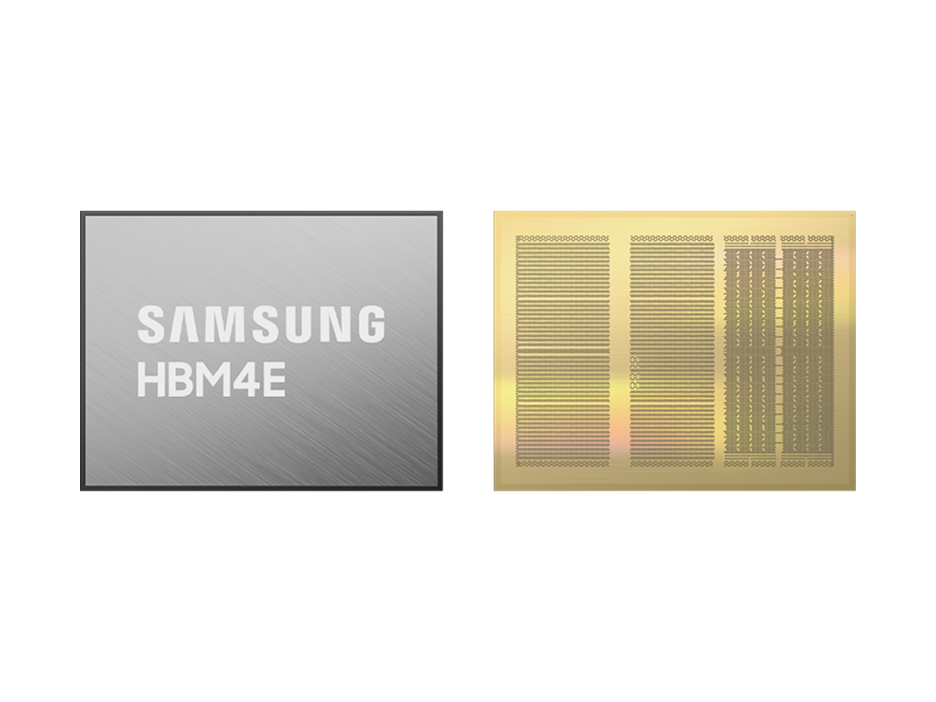

Up to 64 GB

Up to 16.0 Gbps

Up to 16H

MPGA

32 ms

2048
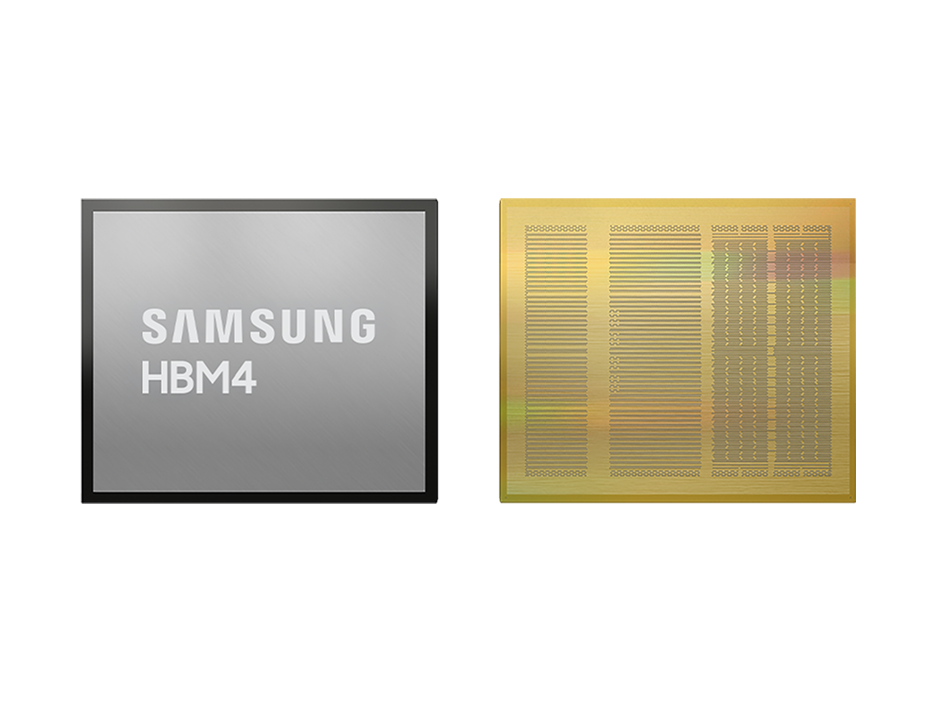
36 GB
Up to 13.0 Gbps
12H
MPGA
32 ms
2048
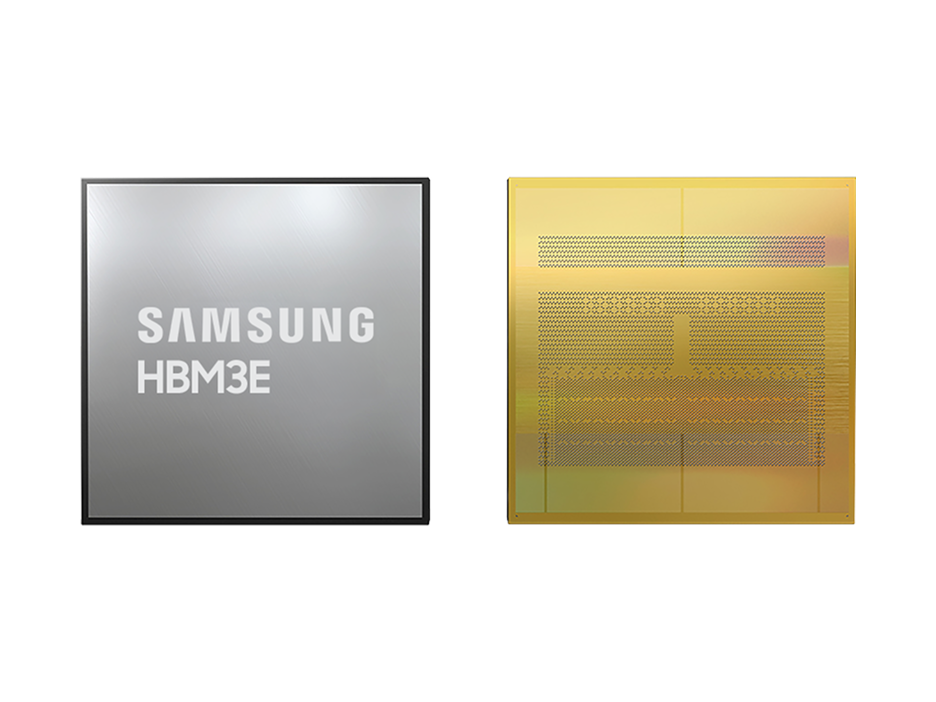
36 GB, 24 GB
Up to 9.2 Gbps
12H, 8H
MPGA
32 ms
1024
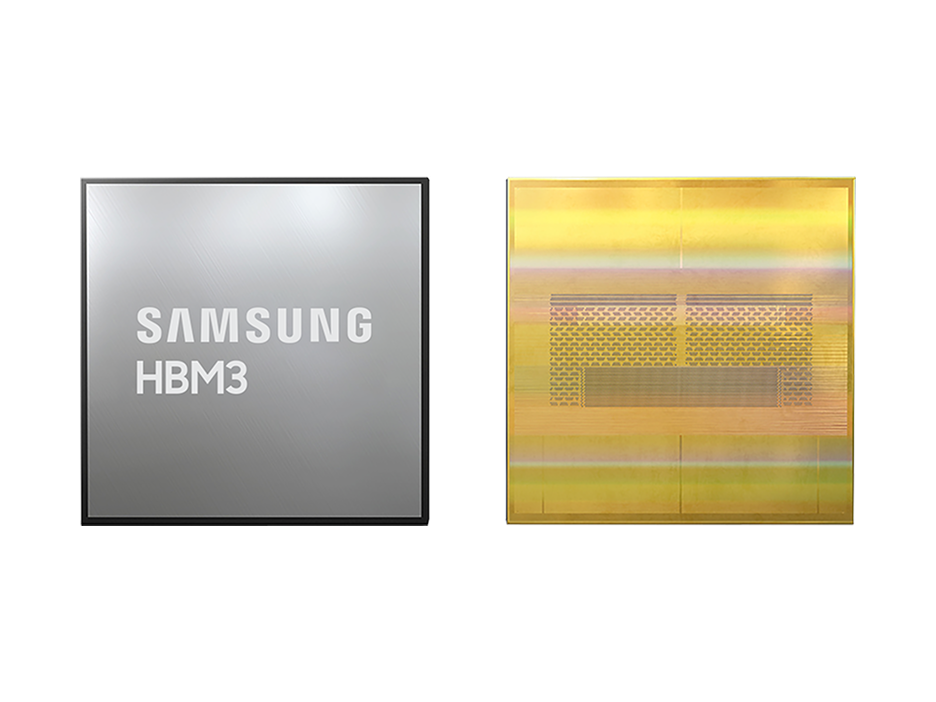
24 GB, 16 GB
Up to 6.4 Gbps
12H, 8H
MPGA
32 ms
1024
Non-Conductive Film (NCF) is an insulating adhesive film used to bond a semiconductor die to a substrate,
and it does not contain copper itself.
However, it is commonly used together with copper micro-bumps, helping to secure the die-to-substrate
connection with precise gap control and without electrical interference.
NCF is a key material in advanced, high-density packaging that provides reliable adhesion using controlled
heat and pressure.
Non-Conductive Film (NCF) is an insulating adhesive film
used to bond a semiconductor die to a substrate,
and it does not contain copper itself.
However, it is commonly used together with copper micro-bumps,
helping to secure the die-to-substrate connection with precise gap control
and without electrical interference.
NCF is a key material in advanced,
high-density packaging that provides reliable adhesion using controlled
heat and pressure.
Non-Conductive Film (NCF) is an insulating adhesive film used to bond a semiconductor die to a substrate, and it does not contain copper itself.
However, it is commonly used together with copper micro-bumps, helping to secure the die-to-substrate connection with precise gap control and without electrical interference.
NCF is a key material in advanced, high-density packaging that provides reliable adhesion using controlled heat and pressure.
The HBM market is highly competitive, and each company adjusts its development and mass-production timelines
based on its own priorities and strategies.
Samsung continues to strengthen its customer-optimized HBM solutions
through technological capability, product quality, and manufacturing stability.
Rather than focusing solely on short-term market share, Samsung prioritizes long-term technology leadership and customer trust,
which is expected to further reinforce its competitive position.
The HBM market is highly competitive,
and each company adjusts its development and mass-production timelines
based on its own priorities and strategies.
Samsung continues to strengthen its customer-optimized HBM solutions
through technological capability, product quality, and manufacturing stability.
Rather than focusing solely on short-term market share,
Samsung prioritizes long-term technology leadership and customer trust,
which is expected to further reinforce its competitive position.
The HBM market is highly competitive, and each company adjusts its development and mass-production timelines based on its own priorities and strategies.
Samsung continues to strengthen its customer-optimized HBM solutions through technological capability,product quality, and manufacturing stability.
Rather than focusing solely on short-term market share, Samsung prioritizes long-term technology leadership and customer trust, which is expected to further reinforce its competitive position.
NCF (Non-Conductive Film) is a non-conductive adhesive film used to bond a semiconductor die to a substrate.
NCF (Non-Conductive Film) is a non-conductive adhesive film
used to bond a semiconductor die to a substrate.
NCF (Non-Conductive Film) is a non-conductive adhesive film used to bond a semiconductor die to a substrate.
Advanced TC NCF improves upon conventional TC NCF by providing more precise control of temperature and pressure during bonding
and by using enhanced NCF materials.
These improvements help reduce voids, contamination, and defects, enabling a more reliable high-density packaging process.
Advanced TC NCF improves upon conventional TC NCF
by providing more precise control of temperature and pressure during bonding
and by using enhanced NCF materials.
These improvements help reduce voids, contamination, and defects,
enabling a more reliable high-density packaging process.
Advanced TC NCF improves upon conventional TC NCF by providing more precise control of temperature and pressure during bonding and by using enhanced NCF materials.
These improvements help reduce voids, contamination, and defects, enabling a more reliable high-density packaging process.
DRAM die processes continue to advance through further scaling, allowing more memory cells to be integrated into smaller areas.
In the longer term, 3D architectures and new materials are also being explored to address physical scaling limits.
DRAM die processes continue to advance through further scaling,
allowing more memory cells to be integrated into smaller areas.
In the longer term, 3D architectures and new materials are also being explored
to address physical scaling limits.
DRAM die processes continue to advance through further scaling, allowing more memory cells to be integratedinto smaller areas.
In the longer term, 3D architectures and new materials are also being explored to address physical scaling limits.
High Bandwidth Memory (HBM) consists of multiple memory dies stacked vertically and interconnected through TSVs
(Through-Silicon Vias).
The package is typically a thin, nearly square unit of around 1–2 cm² in area and approximately 1 mm thick,
with thickness depending on the number of stacked dies.
High Bandwidth Memory (HBM) consists of multiple memory dies stacked vertically
and interconnected through TSVs (Through-Silicon Vias).
The package is typically a thin, nearly square unit of around 1–2 cm² in area
and approximately 1 mm thick, with thickness depending on the number of stacked dies.
High Bandwidth Memory (HBM) consists of multiple memory dies stacked vertically and interconnected through TSVs (Through-Silicon Vias).
The package is typicallya thin, nearly square unit of around 1–2 cm² in area and approximately 1 mm thick, with thickness depending on the number of stacked dies.
HBM products commonly come in 4-high, 8-high, and 12-high stack configurations, depending on the product generation.
More layers provide higher capacity and bandwidth but also increase thermal and manufacturing challenges.
HBM products commonly come in 4-high, 8-high, and 12-high stack configurations,
depending on the product generation.
More layers provide higher capacity and bandwidth
but also increase thermal and manufacturing challenges.
HBM products commonly come in 4-high, 8-high, and 12-high stack configurations, depending on the product generation.
More layers provide higher capacity and bandwidth but also increase thermal and manufacturing challenges.
Specific timelines for HBM customer qualification have not been publicly disclosed.
Specific timelines for HBM customer qualification have not been publicly disclosed.
Specific timelines for HBM customer qualification have not been publicly disclosed.

Evolution of semiconductor solutions for servers
https://semiconductor.samsung.com/support/contact-info/global-network/

 Global